stVaults Digest: May-June 2026
stVaults are Lido V3's new staking primitive, offering modular staking infrastructure with optional stETH minting.
This article covers recent updates across stVaults and its Web UI: new products built on the platform, new features, and new custodian guides.
Entry Queue Status
The Ethereum validator entry queue kept growing through May, passing 60 days late in the month, before easing to an average of 50 days in June.
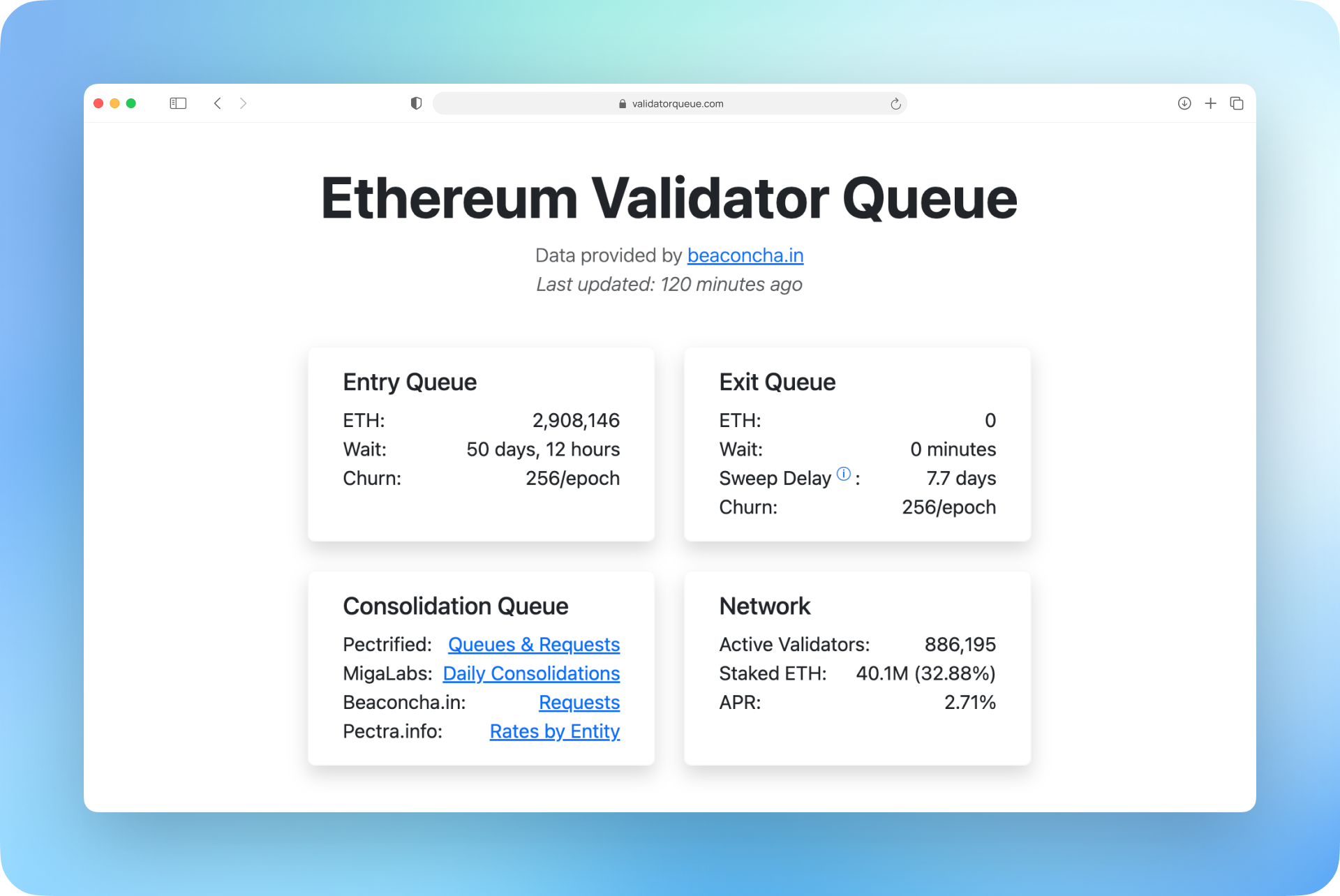
If you want to migrate to stVaults while avoiding the entry queue, consider validator consolidation. Source validators keep accruing rewards throughout the migration, and after consolidation, stakers can access stETH, which unlocks DeFi composability, enhanced rewards, and liquidity for large staking positions. As a bonus, the stVaults infra fee waiver has been extended through the end of August.
Products Overview Hub
The stVaults Products Overview is growing, with new products and use-cases built on the platform:
- Luganodes stVaults: isolated, non-custodial vaults for institutions, operated by Luganodes, with configuration under the client’s control. Full story in the Lido blog.
- Nansen ETH Vault: stake ETH directly to Nansen-operated validators and earn staking rewards, with transparency into the validator operator. More details covered in the blog.
- Pro-Delegators by Nuxian Labs: two products, Ethereum Staking and Liquid Staking 90%, both built and operated by the Pro-Delegators team.
- Linea Yield Boost, built by the Linea Consortium with Consensys Staking as Node Operator: ETH bridged to Linea is partially staked on Ethereum mainnet through Lido V3, with staking rewards funding ecosystem incentives rather than treasury emissions. Users keep full custody and the same withdrawal guarantees.
See all featured products on the Products Overview page.
To get your vault featured on the hub, reach out to the team:
stVaults Web UI
The stVaults Web UI gives vault builders and owners a simple, well-instrumented interface to set up and monitor their vaults. Recently, the stVaults team shipped several additions.
Anti-scam protections for stakers
The Web UI now warns stakers about risky transactions and blocks certain operations if the stVault setup would allow third-party actors to scam stakers.
Settling Lido fees in the UI
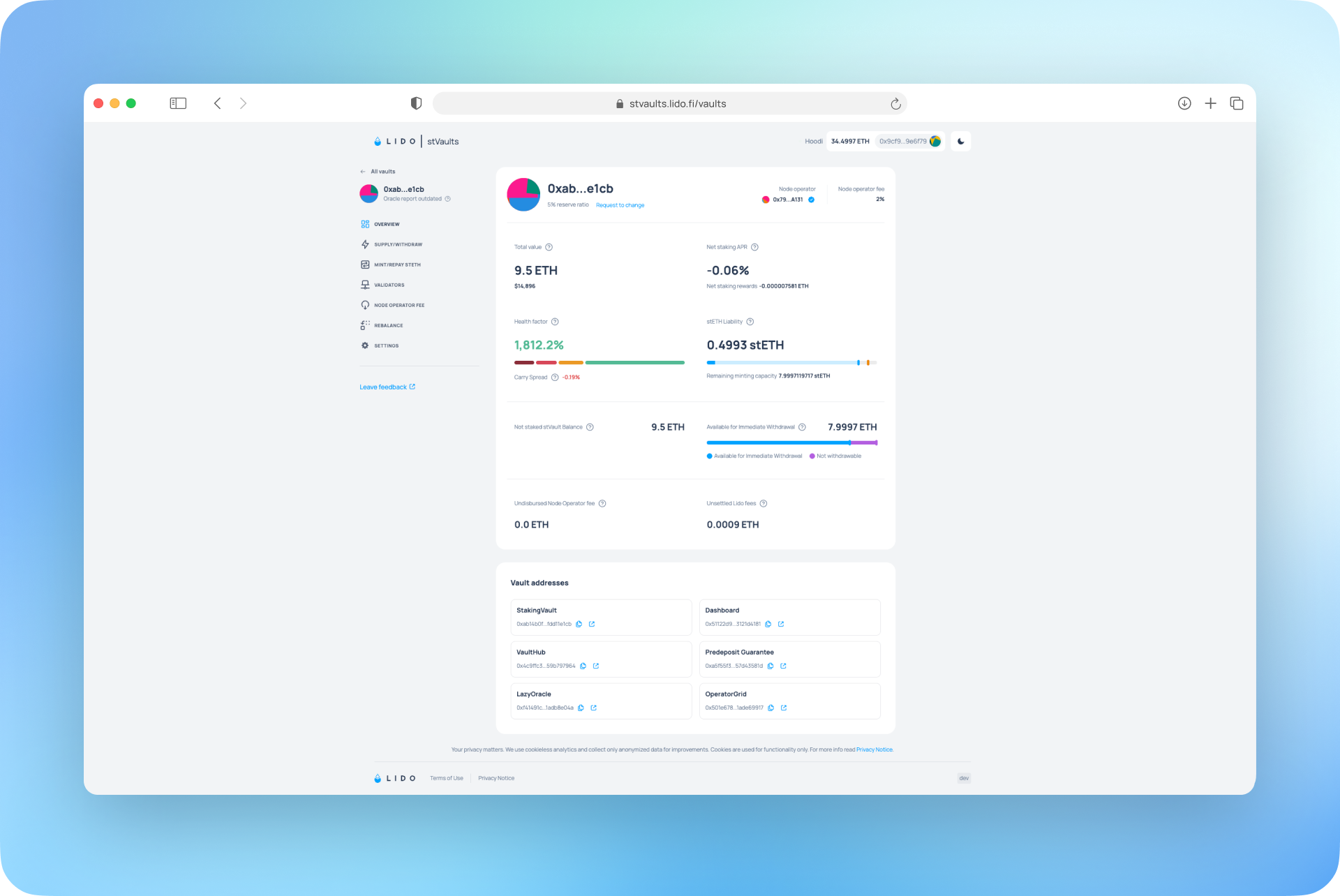
Lido fees need to be settled before performing certain actions with an stVault. Settlement is permissionless, so Vault Owners and Node Operators can now review and settle fees directly from the Web UI, without dropping to the CLI.
Rebalancing in the web UI
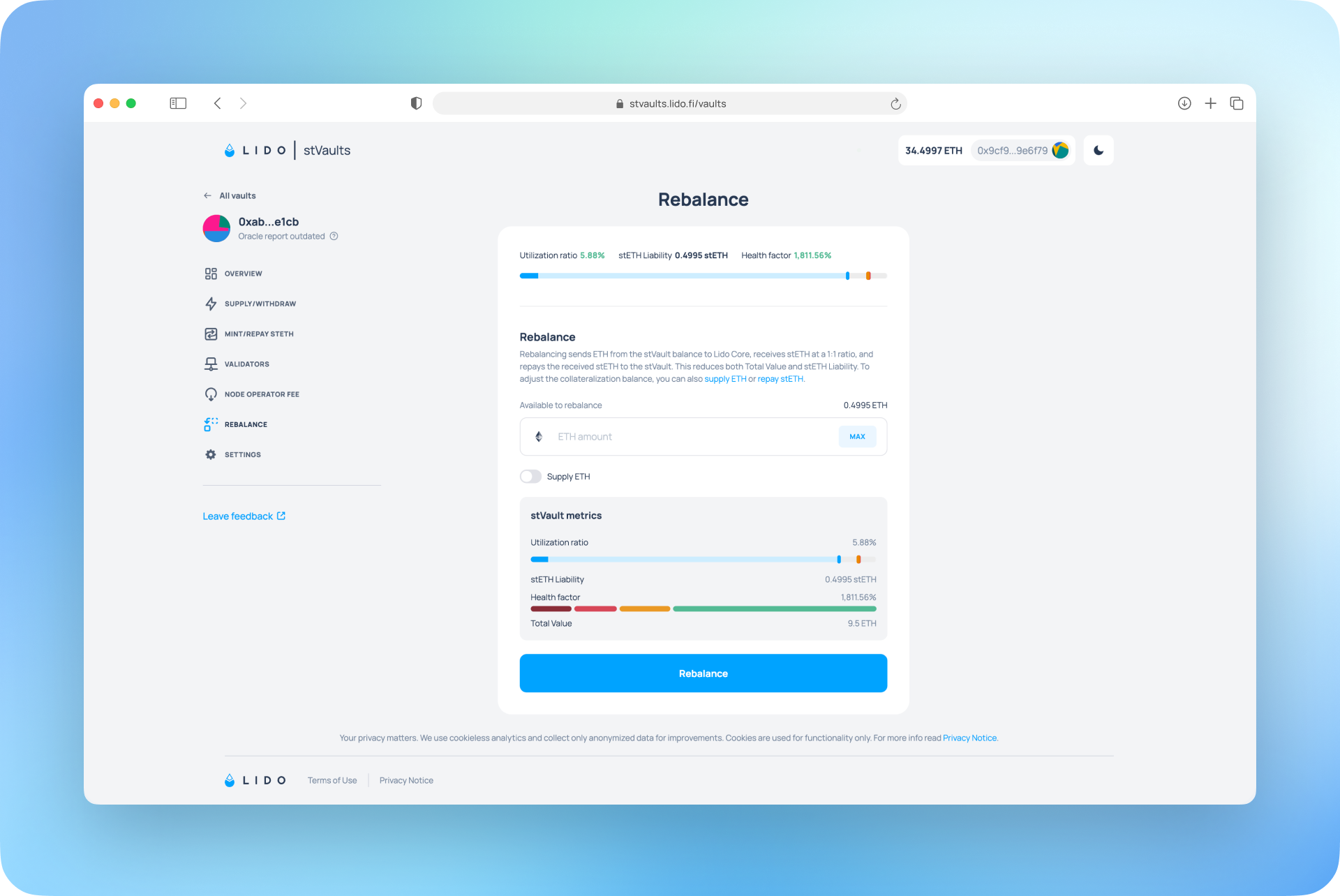
The Lido stVaults Web UI now supports rebalancing: repaying stETH liability using ETH from the vault's own balance.
For institutions, rebalancing simplifies the redemption fulfillment process. After a redemption request is fulfilled by minting stETH from the stVault and swapping it for ETH, the resulting stETH liability can be covered by rebalancing the position through the web interface.
Previously, this required using the command-line interface or interacting with the smart contracts directly. With the update, vault owners can perform the operation themselves, within their usual approval and custody setup.
stVaults Doc Center
More custodian guides landed in the Doc Center.
- Cactus Custody: a new user guide covers how Cactus Custody clients create and manage stVaults through Cactus Link, the custodian’s DeFi connector, from an existing custody account. More context is covered in the blog.
The Qualified Custodians overview now also lists the stVaults smart-contract addresses that need to be whitelisted before interacting, collected in one place.
Want to talk through stVaults for your vault, your product, or your roadmap? Get in touch.