stVaults Monthly Updates: March-April 2026
stVaults are a new staking primitive introduced in Lido V3. They resolve the native staking vs. pooled staking tradeoff by giving Node Operators full control over validator operations, with the option to offer clients stETH liquidity and DeFi integrations.
Here's what’s new with stVaults in April.
Entry Queue Status
The Ethereum validator entry queue stretched to ~54 days by late April.
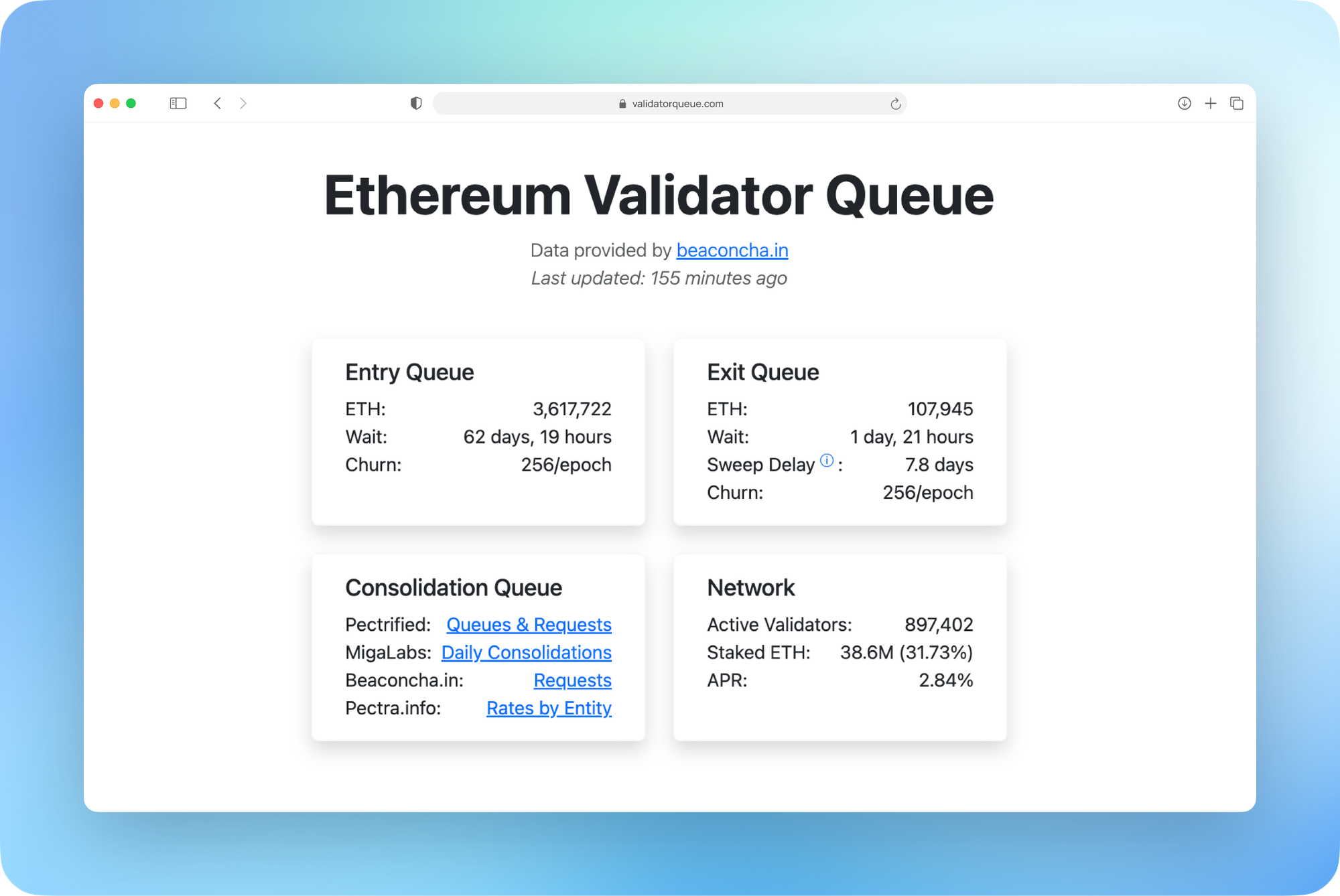
With the entry queue running long, Lido contributors have surfaced two options that help stakers begin migration and take full advantage of stVaults:
- Validator consolidation: this approach enables stakers and operators to migrate stake into an stVault, while largely bypassing the entry queue. Source validators continue accruing rewards throughout the migration. This unlocks DeFi composability, enhanced rewards, and liquidity for large staking positions.
- 0% infra fee extended through the end of June: this limited-time offer waives Lido’s base stVaults fee to offset the cost of stVault migration, especially for cases where validator consolidation is not possible.
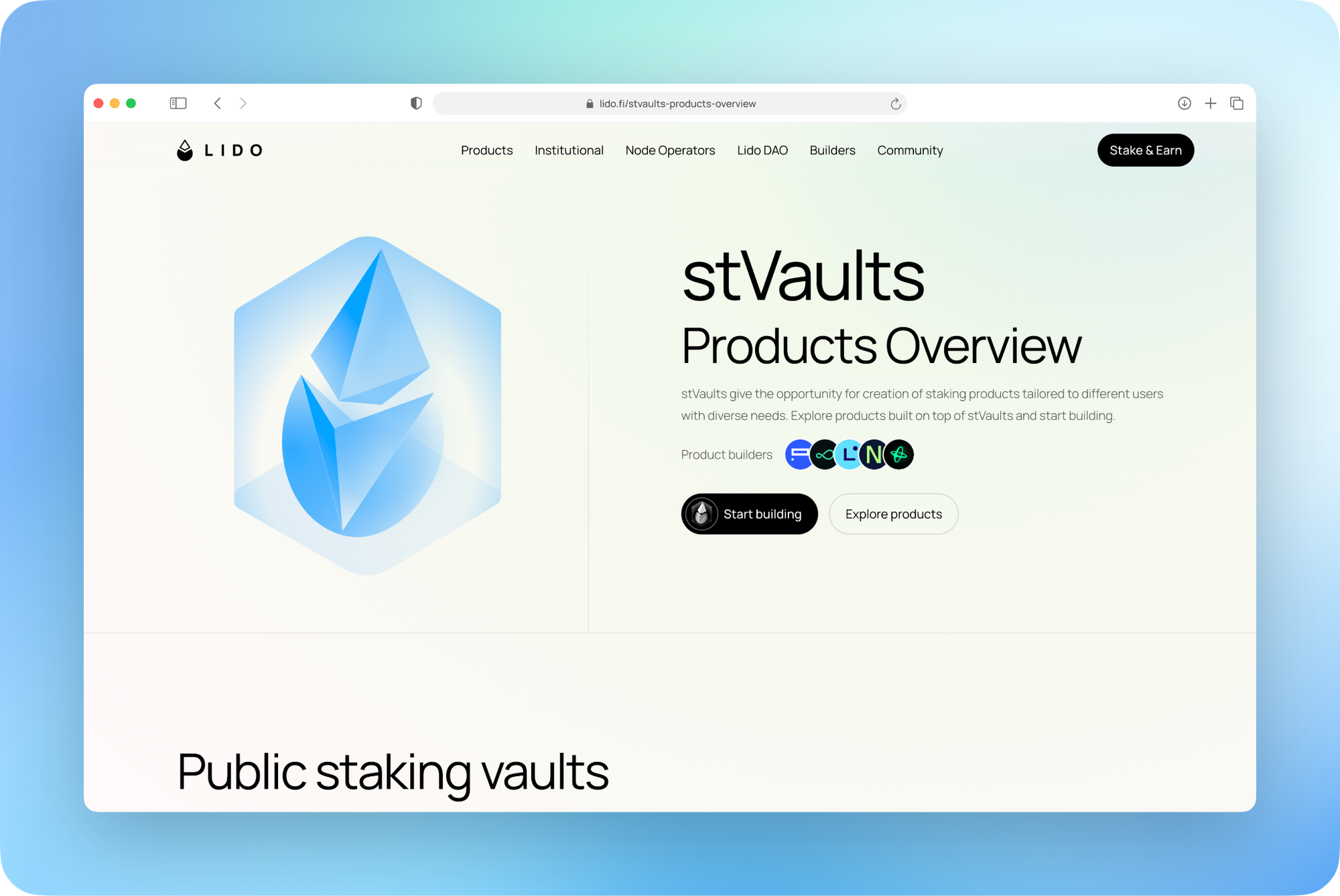
Products Overview Hub
stVaults now have a dedicated products page. The discovery hub showcases leading vault-based products built on the platform. There are three products are listed at launch:
- RockSolid AutoPlus Looped ETH Vault: public-access looped ETH yield strategy, built by RockSolid and curated by Tulipa Capital.
- Northstake Staking Vault Manager (SVM): institutional staking vault manager, built by Northstake.
- Ebunker stVaults: institutional vault product, built by Ebunker.
To get your vault featured on the Lido stVaults Products Overview, reach out to the team by filling out these forms:
DeFi Wrapper: Lido Earn Connector
The DeFi Wrapper added a connector to Lido Earn, opening a clean path between vault-issued stETH and composable DeFi. Builders working with the Wrapper can route stake to Earn as part of their strategy without bolting on extra plumbing.
stVaults Web UI
The stVaults Web UI provides a simple, well-instrumented interface for vault builders and owners to monitor vault performance. In April, the stVaults team launched new tooling:
Handling large deposits and consolidations in key metrics
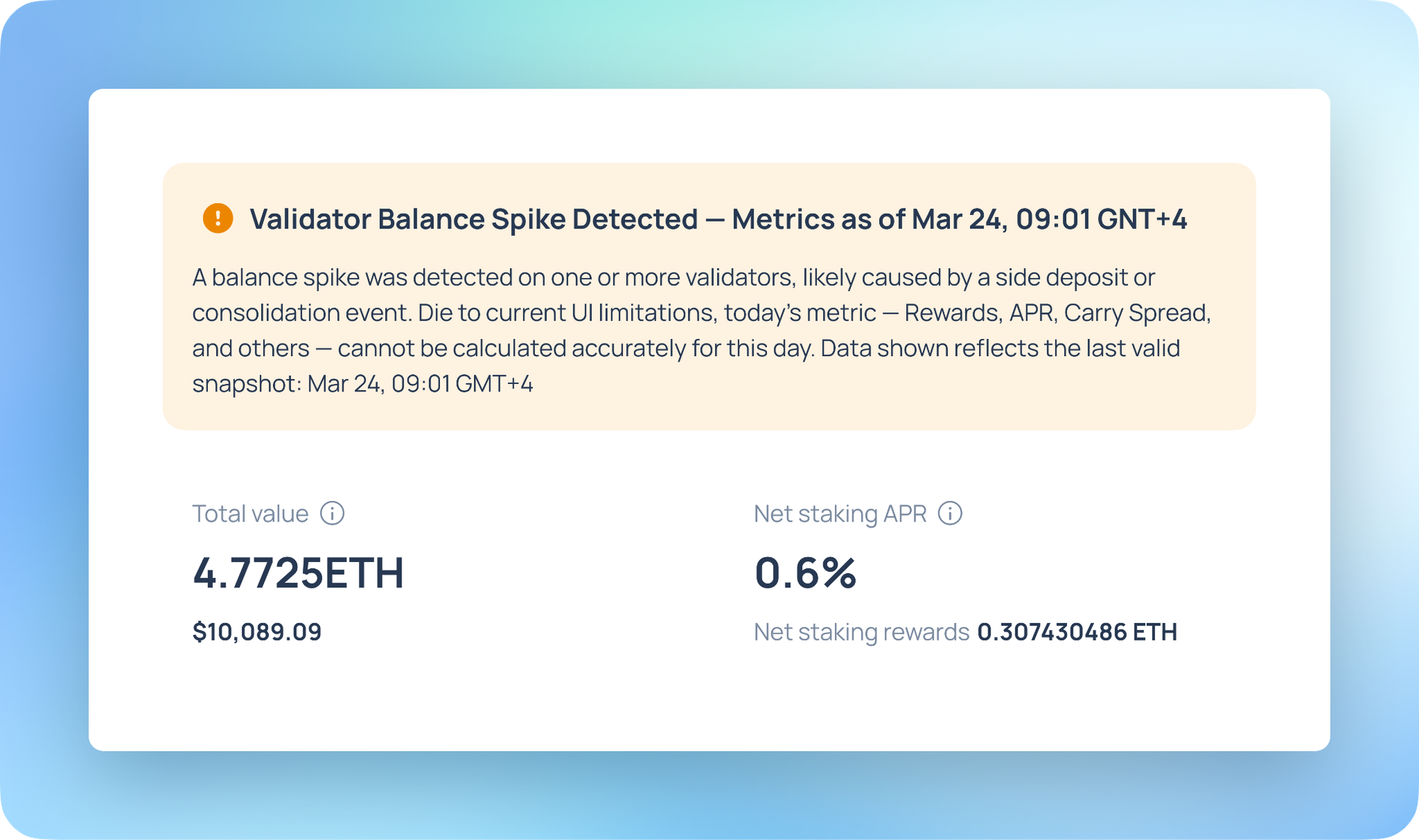
With the current entry queue, unguaranteed deposits and validator consolidations are a normal part of running a vault. However, they can also produce one-off spikes in APR and CarrySpread.
The Web UI and CLI now detect these as statistical outliers and exclude those days from rolling calculations. Users now receive a warning on the stVault details page when this happens.
Oracle Report Status Indicator
The Overview page now shows the oracle report’s date and status. Users can manually request it by clicking the “Apply fresh report” button, or it gets applied automatically before any action that requires one.
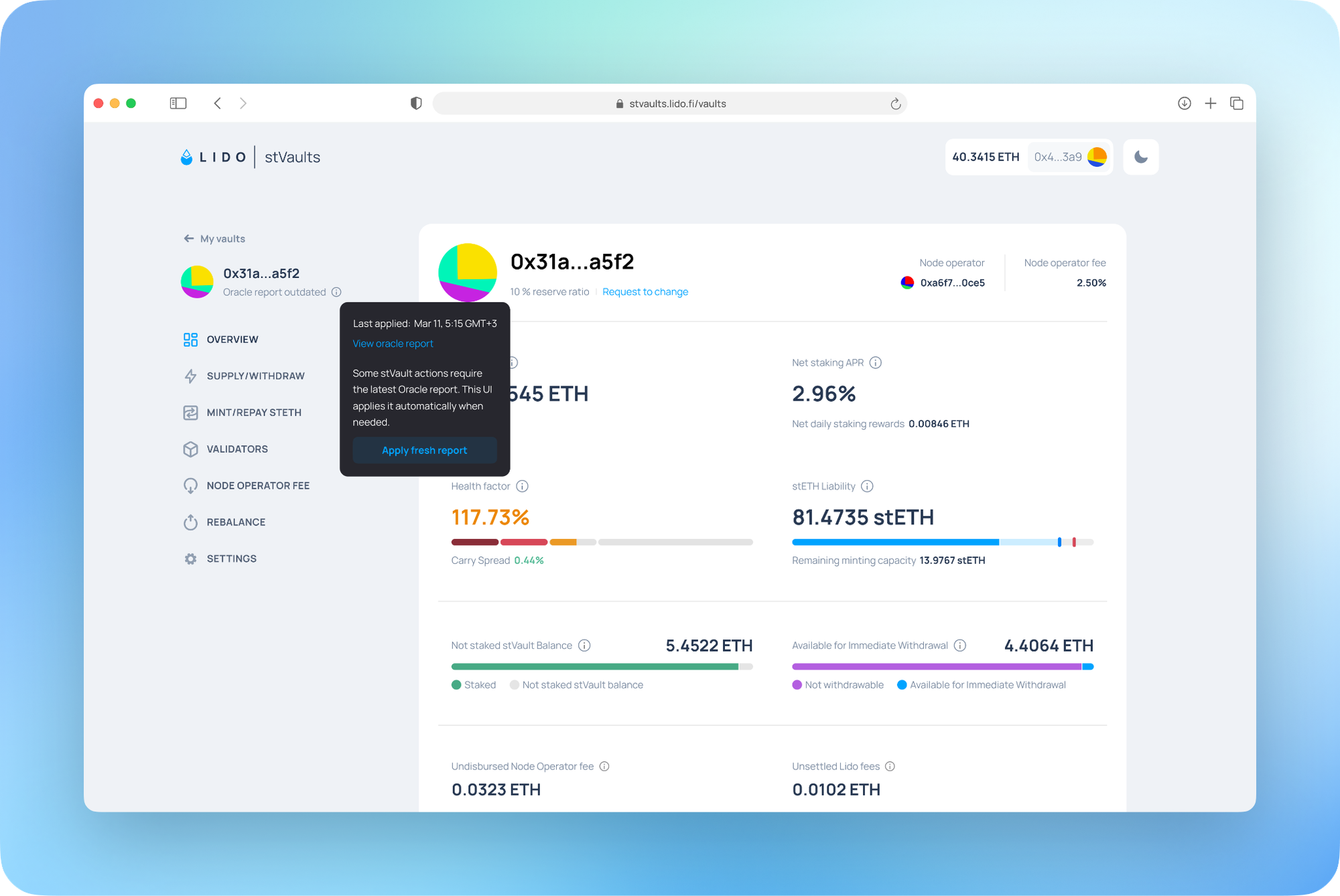
stVault Address Overview
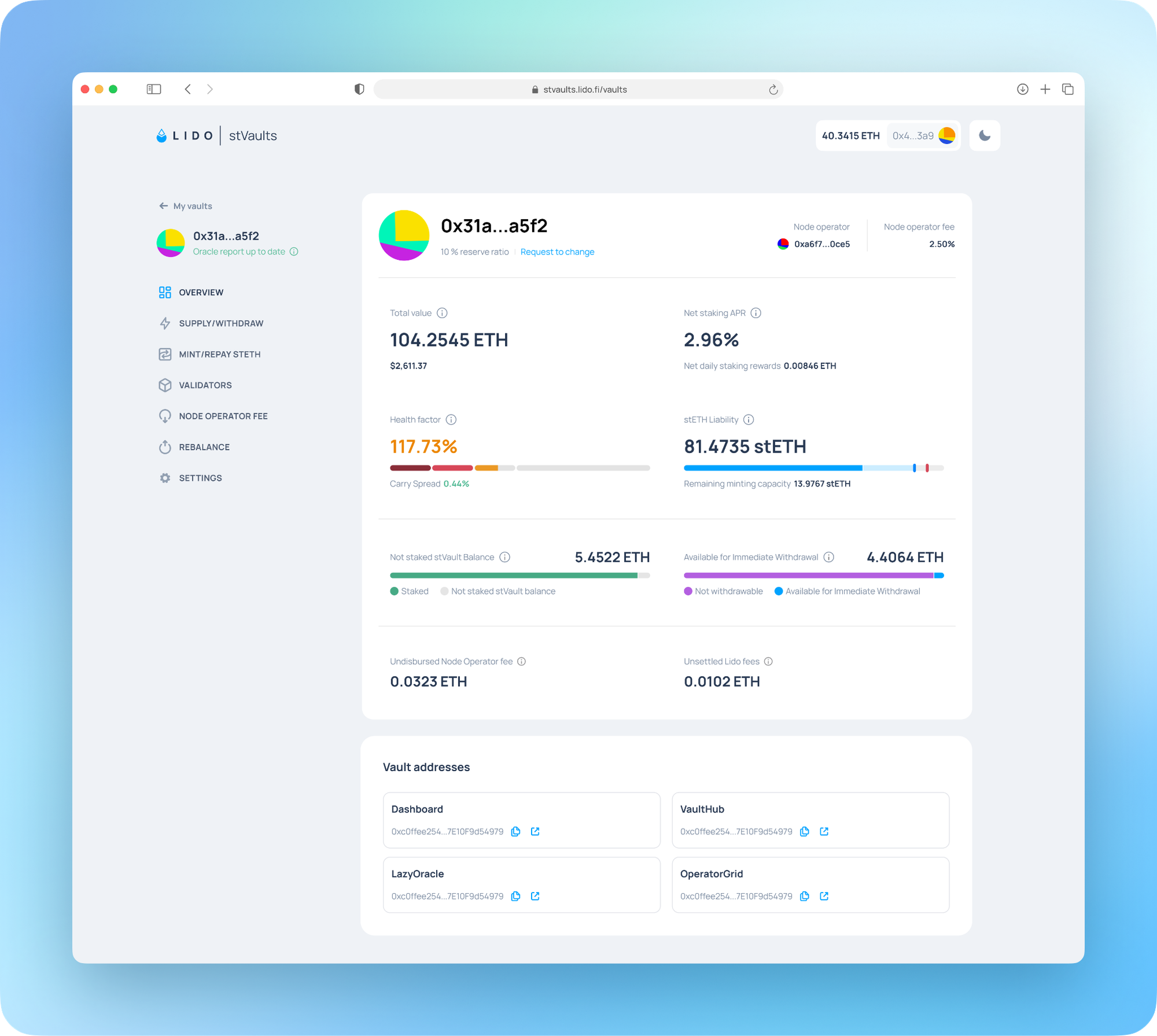
The stVaults Web UI now displays a list of important addresses associated with the stVault: Dashboard, VaultHub, OperatorGrid, and LazyOracle. Users who need a specific address to use in Etherscan or the CLI can find it on the stVault details page.
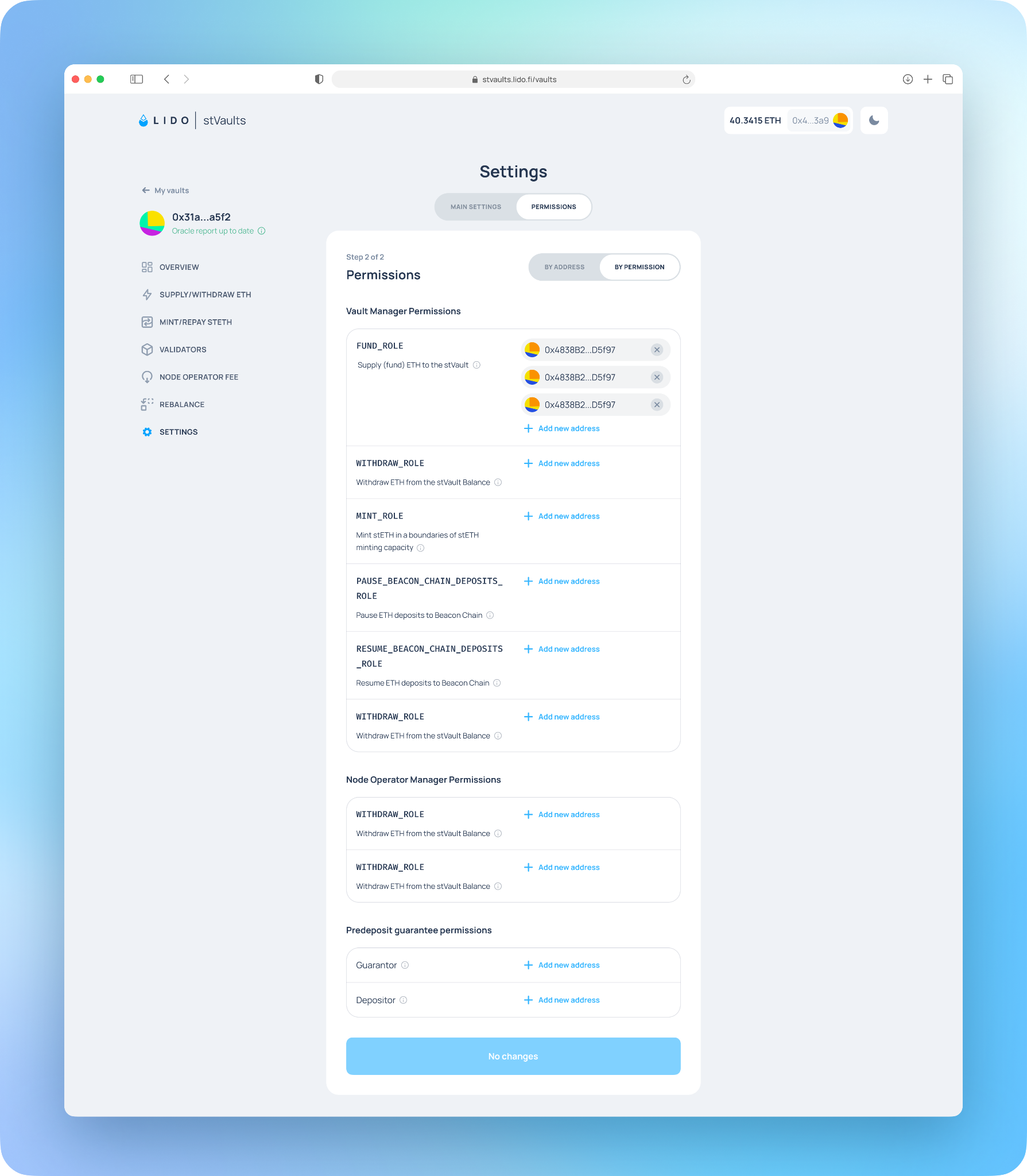
Permissions Page Improvement
The Permissions settings page now displays technical names for roles and permissions, making it easier for users who work across both the Web UI and CLI to identify roles consistently. Full role descriptions are now also accessible directly in the UI.
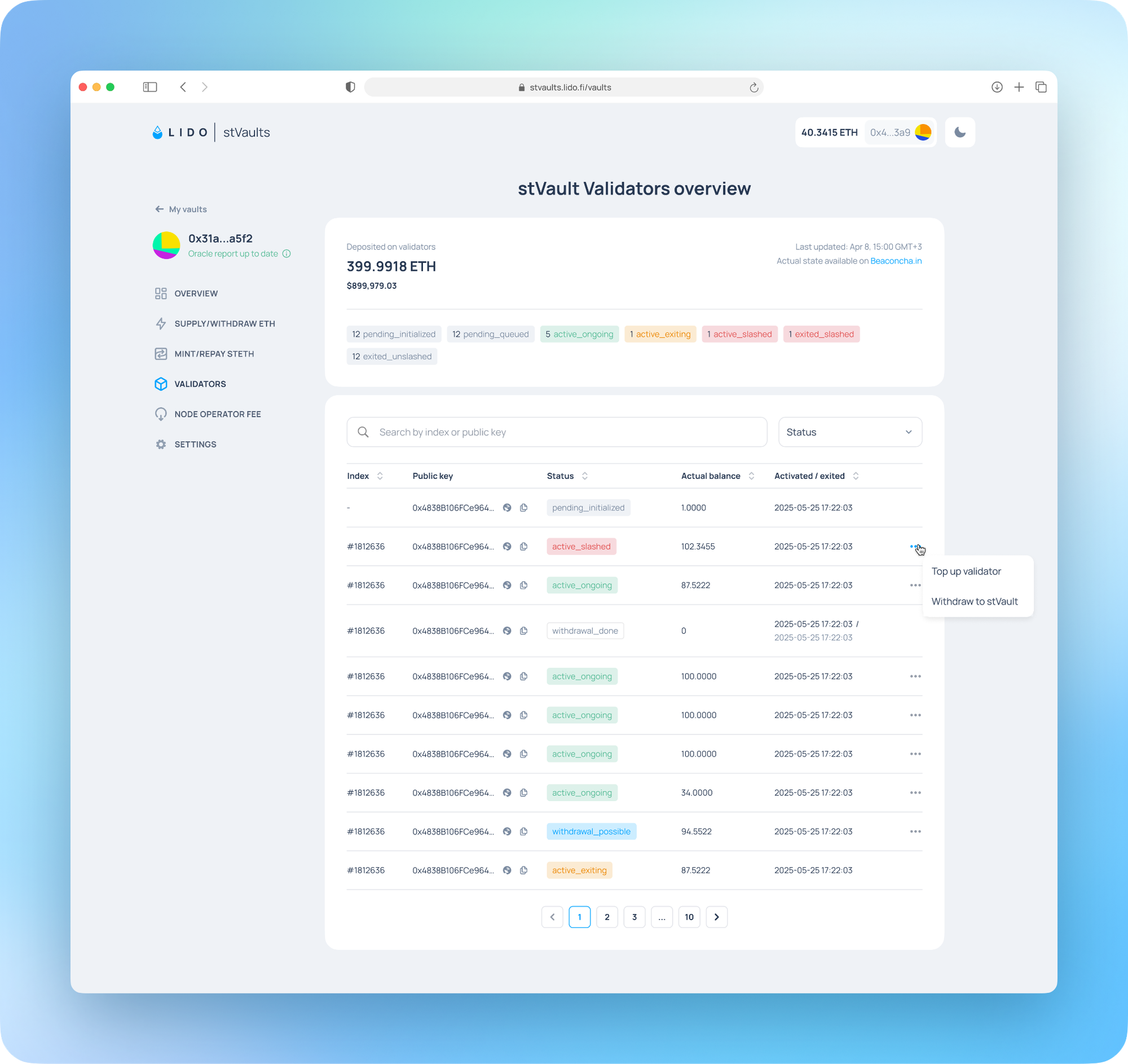
Validators Page: Status, Top-ups & Withdrawals
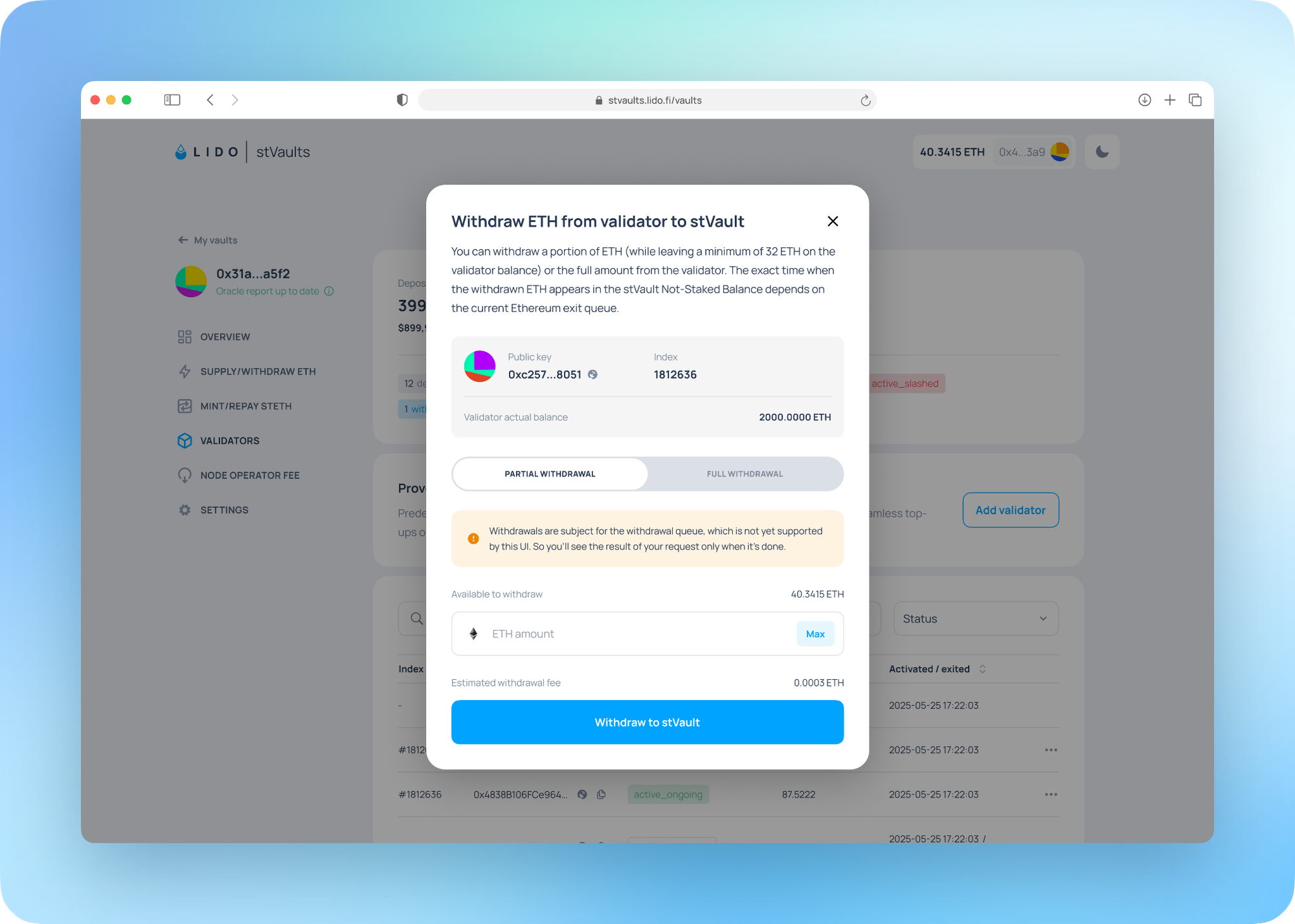
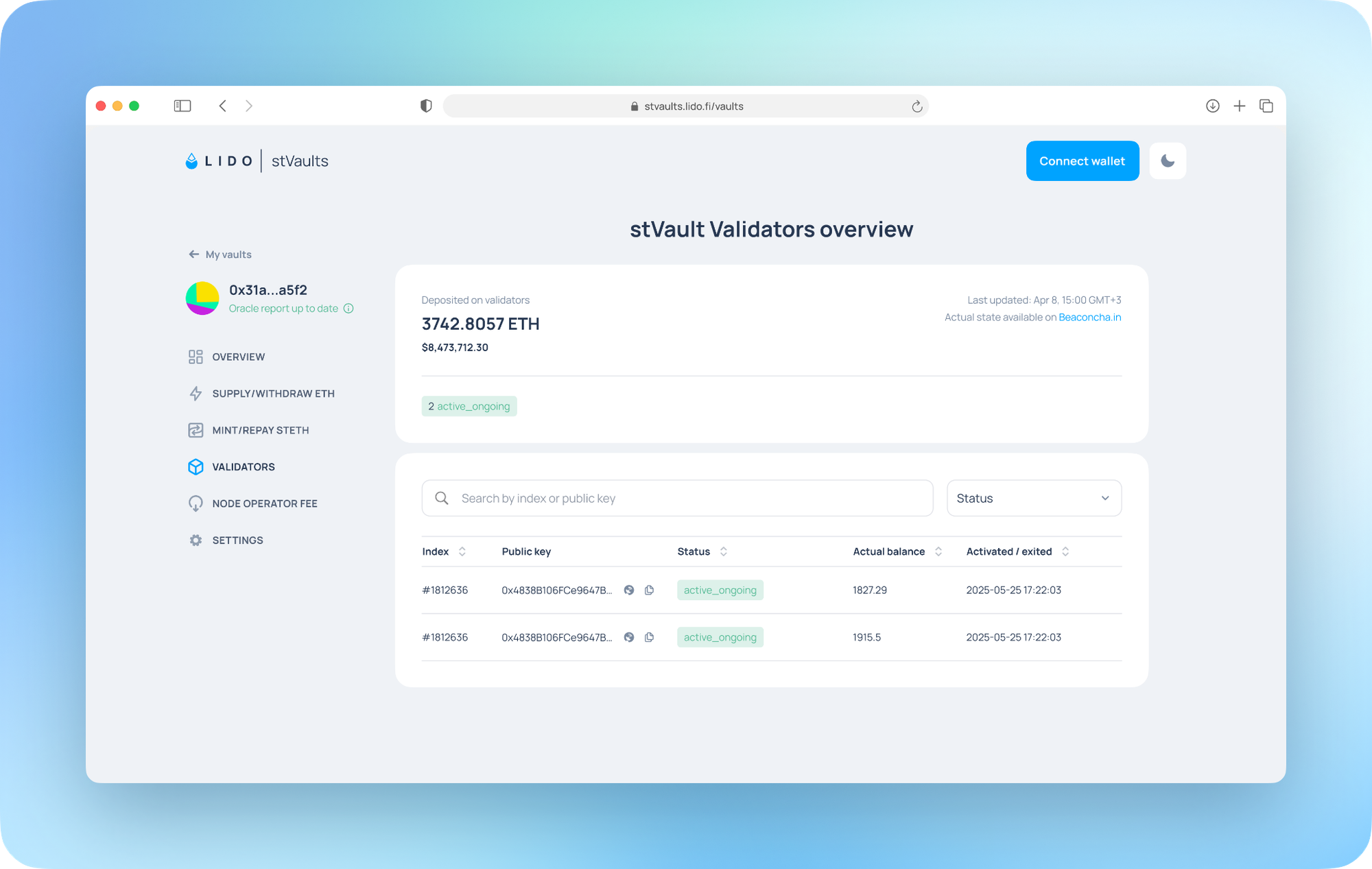
Users can now see their validators' status on the Beacon Chain and (depending on their role) top them up from the stVault balance, or perform partial or full withdrawals. All in the Web UI, no CLI required.
Another step toward enabling institutional stakers to exercise granular control over funds via the web interface.
stVaults CLI v1.6 → 1.8
New Capabilities
Strategy contracts connected to StvStrategyPool now have full CLI support: dedicated read/write commands and timelock governance flows (propose/execute) at the same level as pools. Etherscan contract verification is handled directly by Factory commands. A new statistic-by-reports-full command gives operators a detailed report-by-report performance breakdown. The Distributor supports claim and snapshot-based distribution mode. Operators can pause and resume minting for stv-steth-pool. The metrics methodology is now fully documented.
Metric Accuracy
netAPR, CarrySpread, and accrued-fee calculations were refined to stay accurate when fee withdrawals or stETH minting happens mid-period. Accrued fee is now computed off-chain from IPFS data, so the numbers are correct even if the latest oracle report hasn’t been applied on-chain yet.
Reliability & Security
A dedicated security pass hardened input validation, URL handling, and cache processing across the CLI. Gas estimation handles low-balance accounts correctly. JSON output is clean and pipe-friendly for scripting. Addresses in tables are clickable block-explorer links, and IPFS now supports CIDv1.
stVaults Doc Center
The Doc Center is live: a single home for stVaults guides, references, and how-tos.
The first major addition is Qualified Custodians, with two user guides covering the workflows institutional stakers and their custodians may use:
- Fireblocks — accessing stVaults via WalletConnect
- Copper — accessing stVaults via CopperConnect
More guides are landing through May.
Lido Poolside: Institutional (Apr 23)
April's Lido Poolside Call was dedicated to institutional staking, with Adam Levine (CEO, Fireblocks Trust Company), Credora, and FalconX, covering DeFi access from qualified custody, Credora's first public asset-level rating on a liquid staking token (stETH at A+), and what's next for institutional Ethereum staking.
Lido Poolside: Institutional, April 2026
What’s Next
A number of exciting stVaults developments are planned for May – stay tuned!
- stVaults UI
- Anti-scam protections for stakers
- Native Lido fee settlement in the UI
- Rebalance and exit flows
- Products Overview
- New product listings
- Docs
- More custodian guides
Want to talk through stVaults for your vault, your product, or your roadmap? Get in touch