Not All ETH ETPs Are Equal
Staking rewards, liquidity and product structure in European ETH ETPs
On the surface, ETH ETPs can look similar, offering investors a listed and regulated route to ETH exposure. Staking changes that dynamic. ETH can be staked to earn network rewards, giving ETH ETPs a source of return beyond just price exposure.
How much of those rewards reaches investors depends on how much ETH is staked, how rewards are shared and how liquidity is managed.
What staking means for ETP liquidity
Staking is only part of the picture for a listed ETH ETP, which needs to support ongoing trading, creations and redemptions. That means natively staked ETPs may need to hold some ETH outside staking, so it is available when needed. The larger the liquidity buffer, the less ETH is generating rewards, while fees and reward sharing determine how much ultimately reaches investors.
A liquidity buffer is necessary for natively staked ETPs because moving ETH into and out of staking is not instant. Ethereum’s entry and exit queues matter in both directions. ETH awaiting validator activation is not yet earning rewards, while staked ETH waiting to exit may not be available when an ETP needs liquidity. Both delays can lengthen during periods of higher demand.
“Staking should add to an ETH ETP’s proposition, not take away from the liquidity investors expect from it. How that is achieved is now a vital part of the comparison.”
Kean Gilbert
Head of Institutional Relations, Lido Ecosystem Foundation
European staked ETH ETPs
Keeping staked ETH liquid
Liquid staking gives an ETP a way to keep its ETH staked while holding a transferable position. That creates an additional route to liquidity, alongside protocol redemption.

What stETH adds to an ETP
The benefits of liquid staking depend on the token an ETP holds. stETH is a transferable representation of staked ETH, allowing an ETP to keep the whole position staked and earning rewards. Its deep secondary-market liquidity gives issuers and liquidity providers an important way to trade larger positions with less price impact, while protocol redemption provides an additional route back to ETH.

WisdomTree Physical Lido Staked Ether
Live example
WisdomTree Physical Lido Staked Ether (LIST) is a 100% stETH-backed ETP. It is listed on Deutsche Börse Xetra, SIX Swiss Exchange and Euronext in Paris and Amsterdam.
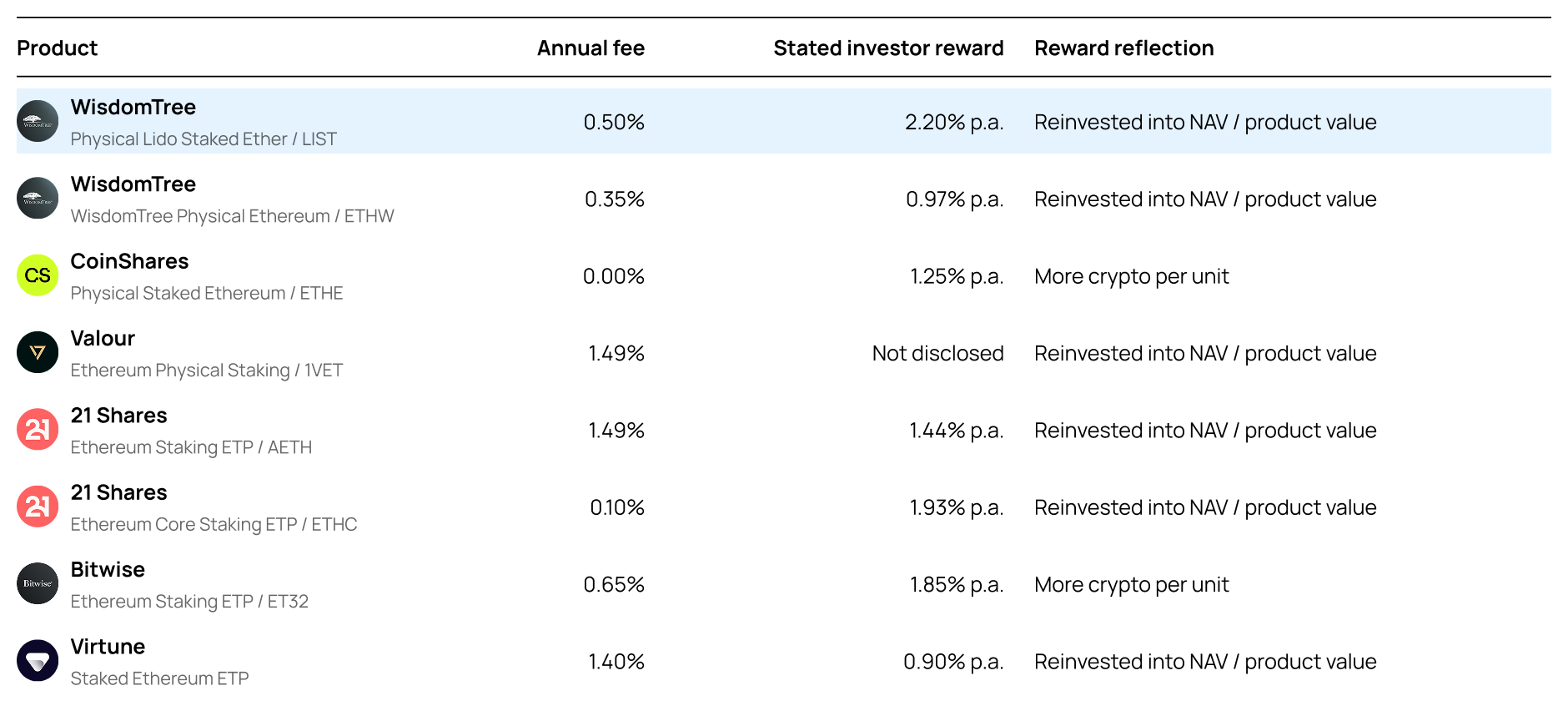
ETFBook lists a 0.50% annual product fee and a stated 2.20% annual investor staking reward. Rewards are reflected daily through NAV, with a stated target of passing 90% of staking rewards to investors.
LIST is an example of what liquid staking looks like within an ETP. Its 100% stETH backing keeps the exposure fully staked, while liquidity can be managed through the stETH market and protocol redemption.
“Lido Staked Ether sits at the centre of Ethereum’s transition to a yield-bearing network. It allows holders to earn staking rewards without locking up capital, creating liquidity and efficiency that extends across decentralised finance.”
Dovile Silenskyte
Director, Digital Assets Research, WisdomTree
What stated reward difference could mean
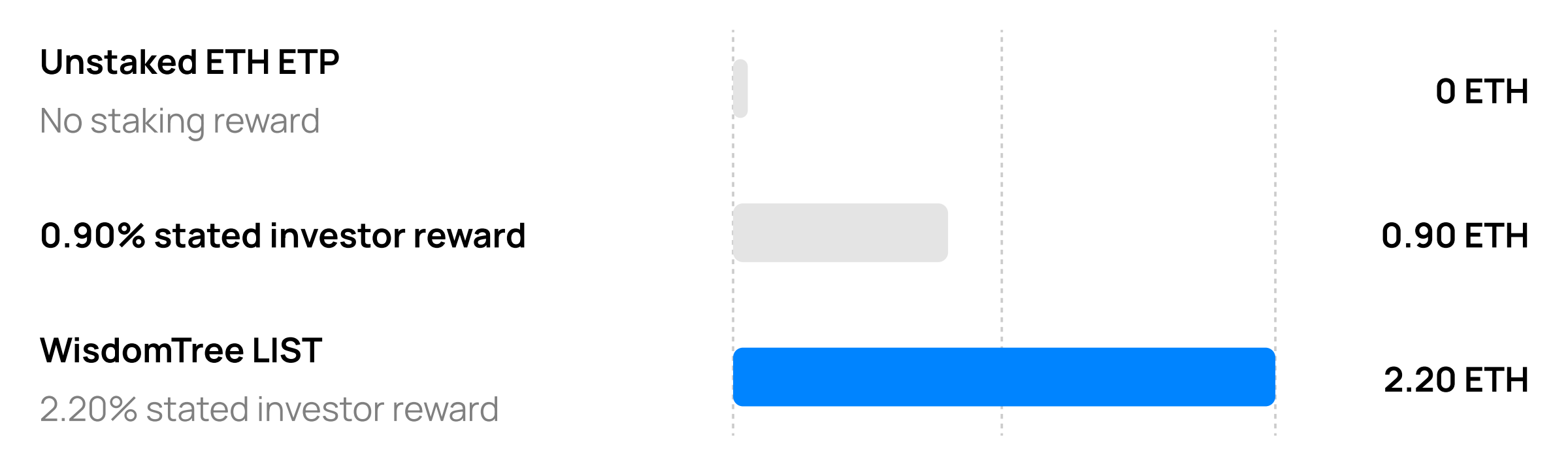
Illustrative ETH-equivalent staking reward per 100 ETH of exposure over one year

Questions for allocators
- Can the product keep the full underlying ETH earning staking rewards?
- How is liquidity managed? Through an unstaked buffer, secondary-market liquidity, protocol redemption, or a combination?
- Is there sufficient market depth to support larger trades with limited price impact?
- What investor reward is stated after fees?
- What independent evidence supports the staking approach?