Exiting ~7,000 Validators: A Case Study in Optimizing Ethereum Validator Exits

In December 2025, A41 announced their decision to wind down validator operations and, as a part of this wind down, conclude its participation as a Lido Curated Node Operator (NO).
While A41 provided a reasonable amount of time as a heads up, it did request that it would like to deprecate all infrastructure by January 31, 2026, thus contributors from the Lido Analytics workstream modeled an exit strategy for the 6,918 validators A41 operated to minimize staking reward loss during the process.
This strategy combined coordinated voluntary exits, batch execution, and sweep-cycle-aware timing, resulting in:
- 4.42x reduction in reward loss compared to the ~78 ETH organic exits baseline
- Total losses brought down to 17.64 ETH by a batched execution approach
- Average skimming wait time reduced from the historical 4.5 days to ~0.8 days
The case study below presents the approach and key assumptions, operational execution, and lessons learned from the exit.
How It Started
Shortly after the announcement, Lido contributors initiated the governance process to facilitate the operator’s exit, during which the DAO approved setting A41’s targetValidatorsCount parameter to 0.
This parameter sets the target value for the number of validators to be deposited to a specific Node Operator, while 0 signals the allocation mechanism should direct exit requests to deposited validators run by that NO.
Exit Parameters
When the exit process was being planned, several network parameters were particularly relevant in determining both the expected exit timeline and the protocol cost associated with validator withdrawals:
- Ethereum network APR: 3.0%
- Validator sweep cycle: 8.5 days
- Average validator skimming time: 4.5 days
- Maximum exit churn limit: 256 ETH per epoch
- Validator queue length:
- Entry queue: ~9 days
- Exit queue: ~19 days
For a refresher on the terms above, please see Ultimate Guide to ETH Staking Withdrawals by Consensys.
A41 Validators
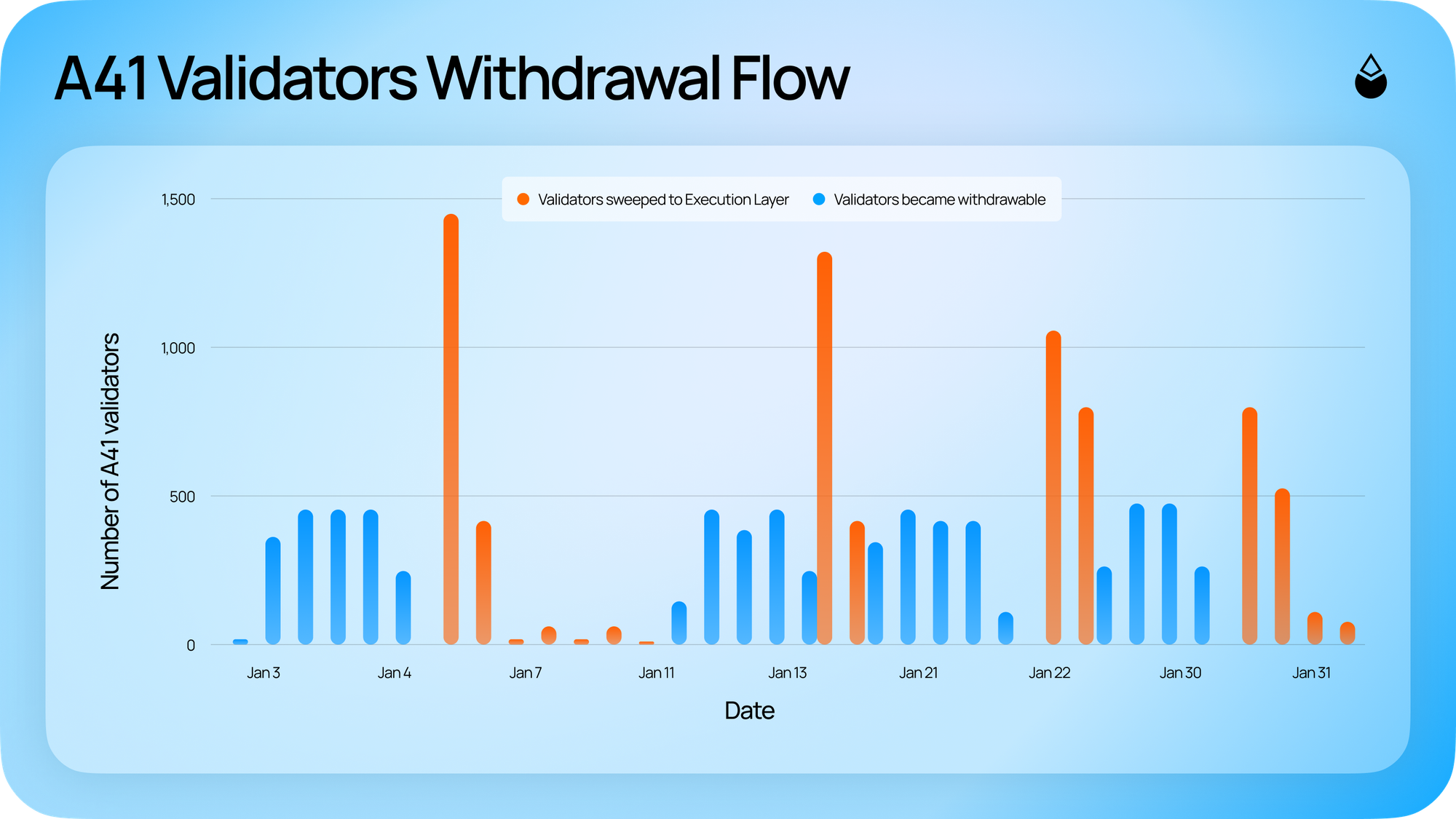
At the time of the announcement, A41 operated 6,918 active validators within the Curated Module (2.51% of Lido deposited validators). The majority of A41 validators were clustered within a similar index range.
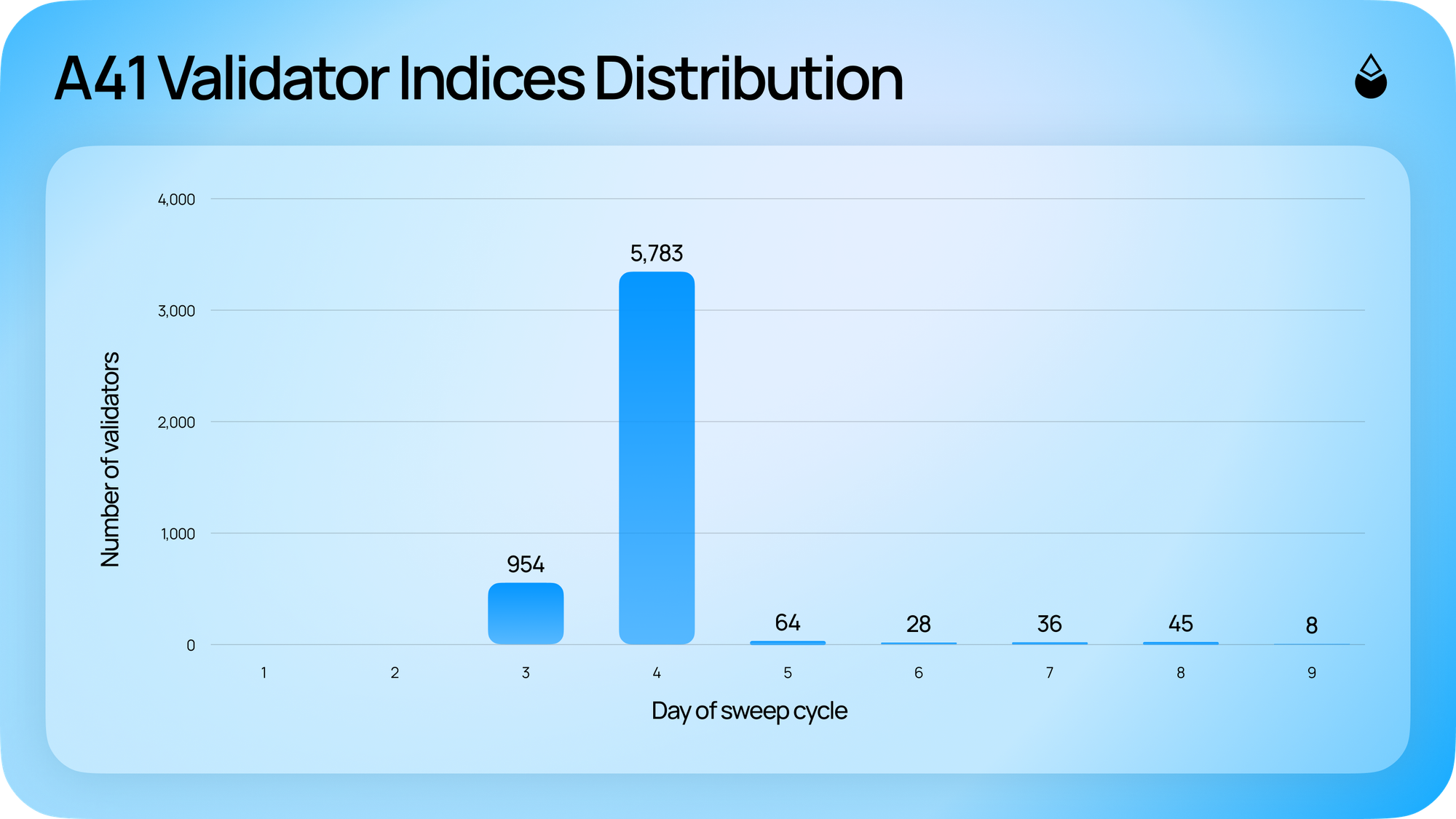
The distribution of validators’ indices plays an important role in shaping the exit strategy. The index determines when validators become eligible for withdrawal in accordance with Ethereum sweep cycle. During this cycle, the blockchain sweeps through the validator set (starting from the validator with index 0), and in each slot identifies up to 16 validators eligible for either a partial or full withdrawal. In the next slot, the process continues from where it left off, progressing sequentially through the whole Ethereum validator set. Once the last validator is reached, the cycle restarts from the beginning.
Given their index distribution, a significant portion of A41 validators entered the sweep pipeline at roughly the same point in the cycle, around the transition from the third to the fourth day, as illustrated below.
Exit Modelling And Planning
To determine the most efficient exit strategy for minimizing staking reward loss under A41’s requested wind-down timeline, contributors from the Lido Analytics workstream evaluated potential exit scenarios and their impacts on execution timing and rewards, that could be foregone during the process.
Organic Exit Capacity
To determine whether these exits could occur organically, contributors analyzed historical Lido withdrawals, simulating how many validators could reasonably be expected to exit through user-initiated withdrawals.
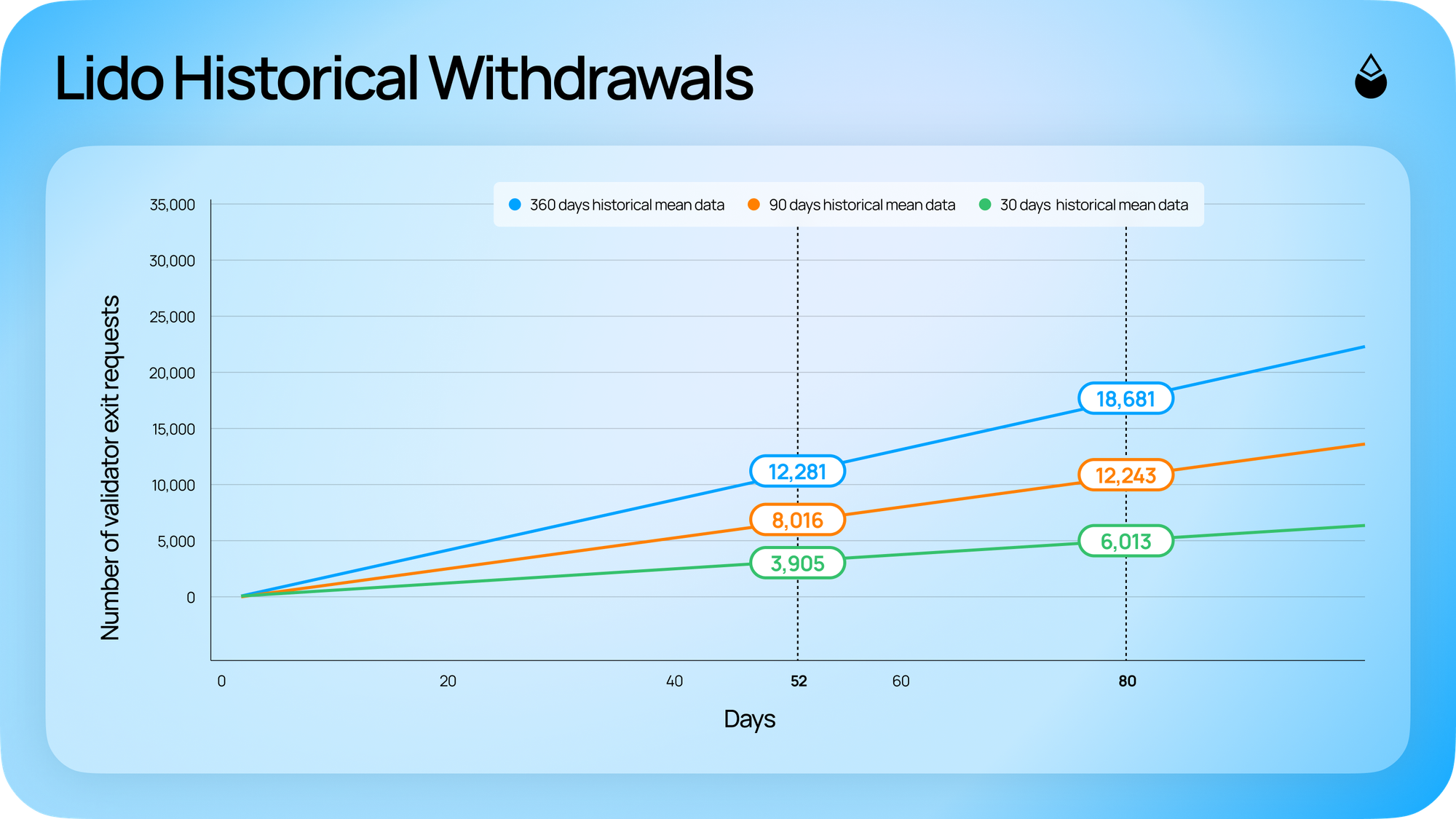
Based on 30-day historical data and mean values, exiting the entire A41 validator set organically would take approximately 80 days. However, the targeted operator wind-down date of January 31, 2026, was only 52 days away.
Longer historical datasets resulted in higher projections, however, these estimates were considered less representative.
- 90-day data: ~8,016 validators
- 360-day data: ~12,281 validators
Thus, it became clear that relying on organic exits alone would be unlikely to complete the wind-down within the required timeframe. Additionally, the A41 validator index distribution was highly concentrated.
Contributors concluded that completing the exit in time would require voluntary exits. The challenge was to minimize financial impact on the Lido protocol while maintaining operational feasibility.
Exit Optimization Strategy
One baseline scenario assumed that all A41 validators would immediately begin exiting. This approach would likely have resulted in the majority of exits being completed by early January. Taking into account the validator skimming time, the total estimated missed rewards would have been approximately 78 ETH, or 10.5% of the daily protocol rewards.
Based on the validator index distribution and current sweep cycle duration, Lido Analytics contributors modeled the range of potential exit windows of A41 validators:
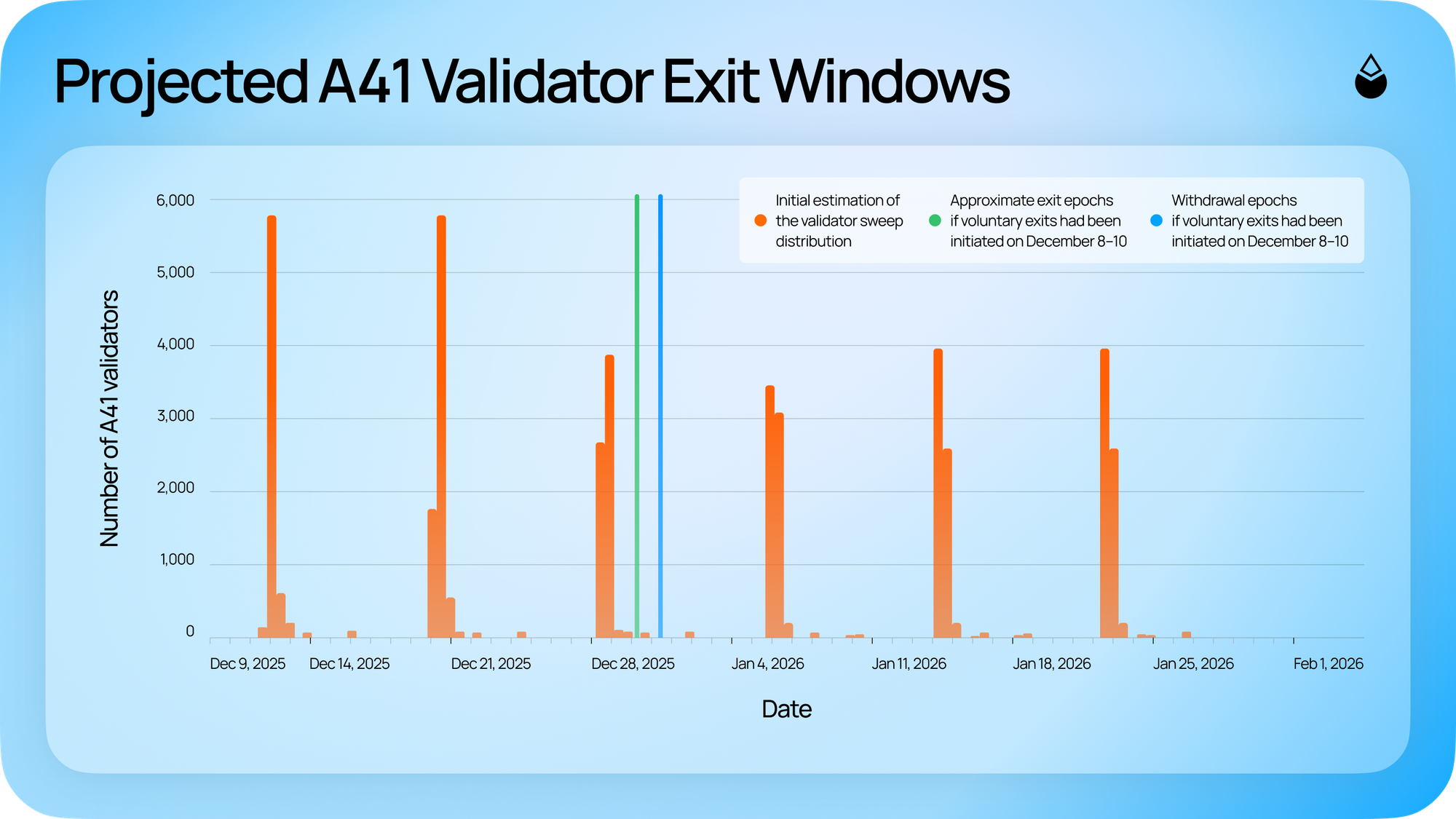
As soon as the validator withdrawal process depends on the validator sweep cycle, poorly timed exits can significantly increase the time validators spend waiting to be skimmed, resulting in unnecessary reward losses. Thus, the key optimization objective was to minimize the time between the withdrawable and sweep epochs for each validator. On the chart above, this can be reflected by aligning the expected withdrawal timing (blue bar) with the validator sweeps (orange), minimizing the delay gap between them.
Simulations suggested that if exits could be triggered with a predefined timing:
- Extreme precision would result in ~35 ETH total missed rewards
- 0.5 day tolerance 一 ~45 ETH
However, executing ~7,000 precisely timed exits individually would require extensive manual intervention and would be operationally inefficient. To address this, contributors proposed executing voluntary exits in coordinated batches.
Batch Exit Design
The batch approach introduced several operational parameters to balance precision, safety, and operational simplicity.
- A safety gap of 60–225 epochs (approximately 6–24 hours) was introduced between requesting the exit and the expected withdrawal eligibility window. This buffer should have mitigated potential risks, including large parallel exits initiated by others, partial withdrawals, and minor inaccuracies in sweep cycle predictions.
- A maximum batch size of 1,800 validators per day, which corresponds to the maximum number of validators that can exit Ethereum per day, was also introduced.
Exit Scheduling Tooling
To implement this batch approach, Analytics contributors suggested deploying a script designed to determine the optimal timing for voluntary exits. The scheduling logic incorporated several real-time network parameters, including:
- Current epoch
- Current position of the skimming pointer
- Size of the validator exit queue
Also, contributors introduced the skimming acceptance level of 0.5 days (12 hours). This parameter made it possible to identify validators for exit when their projected time between the withdrawable and skimming epochs fell below the skimming acceptance threshold. It should have reduced projected exit losses by ~8.6 ETH.
Based on these, the script generates an exit distribution order tailored to a specific Node Operator. After review and adjustment, the results can be exported as a final grouping file, enabling the NO to request exits while continuously monitoring validators’ behavior throughout the process.
Exiting 200,000+ ETH
A41 implemented its own script to call batch voluntary exits. The script was triggered manually during the defined exit windows. Before executing all batches’ exits, a test batch was used to validate the approach.
Test Batch
The first batch consisted of 181 validators and was exited as a test run to confirm that the workflow and tooling behaved as expected. It intentionally included validators with highly dispersed validator indices, because splitting them would have increased operational complexity without improving efficiency.
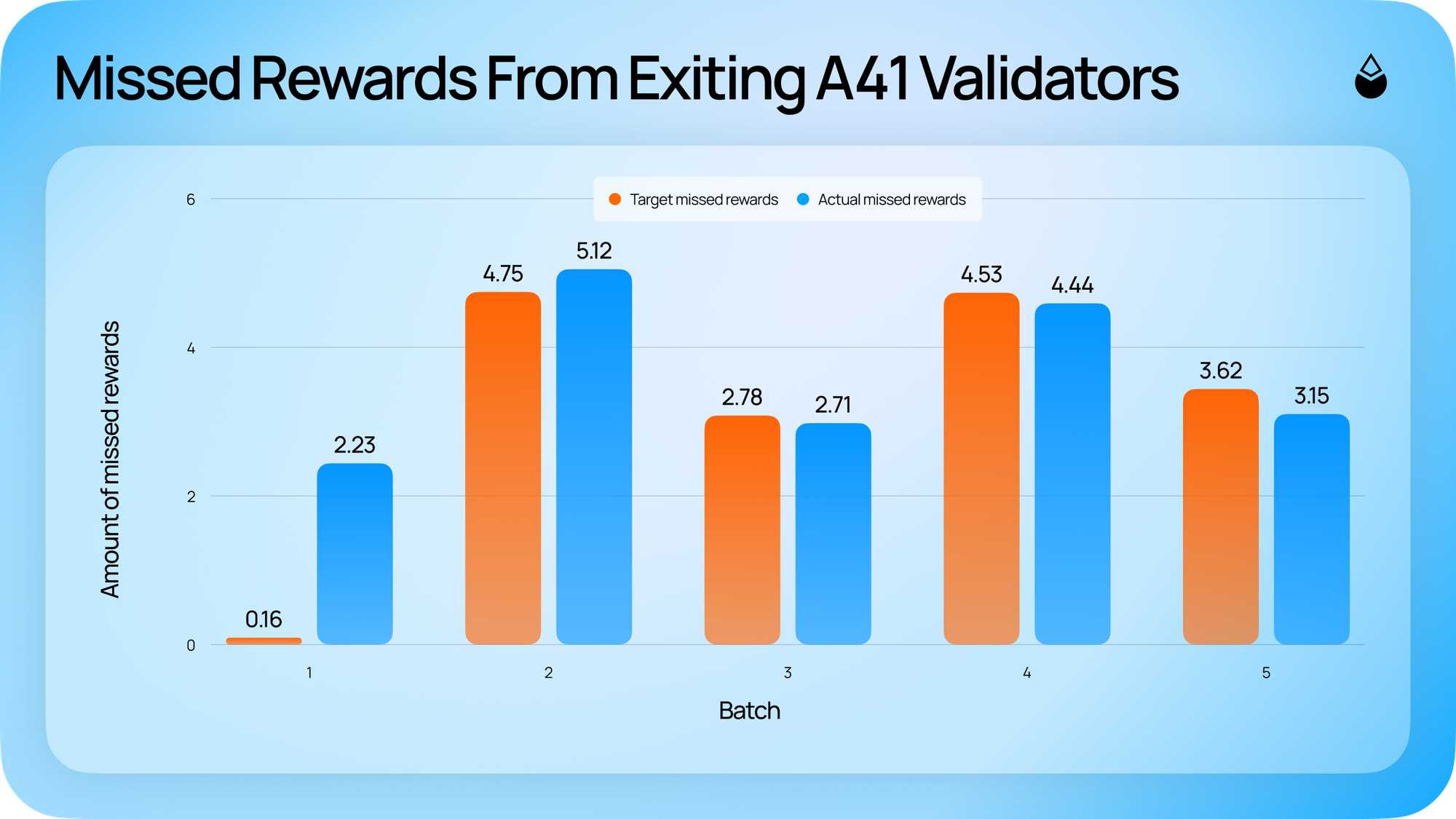
The exit script successfully processed the non-sequential validator set; the actual amount of missed rewards was 2.23 ETH.
Coordinated Batch Execution
Following the successful test batch, four additional batches were planned to exit. The operational workflow was structured as follows:
- Lido Analytics contributors defined and shared all validator batch details, including their execution order and approximate target timelines.
- Approximately 24 hours before execution, contributors confirmed with A41 the initiation of each upcoming batch.
- A41 triggered the exit script within a ~12-hour exit window, aligning exits with the predicted optimal timing.
Batch #2
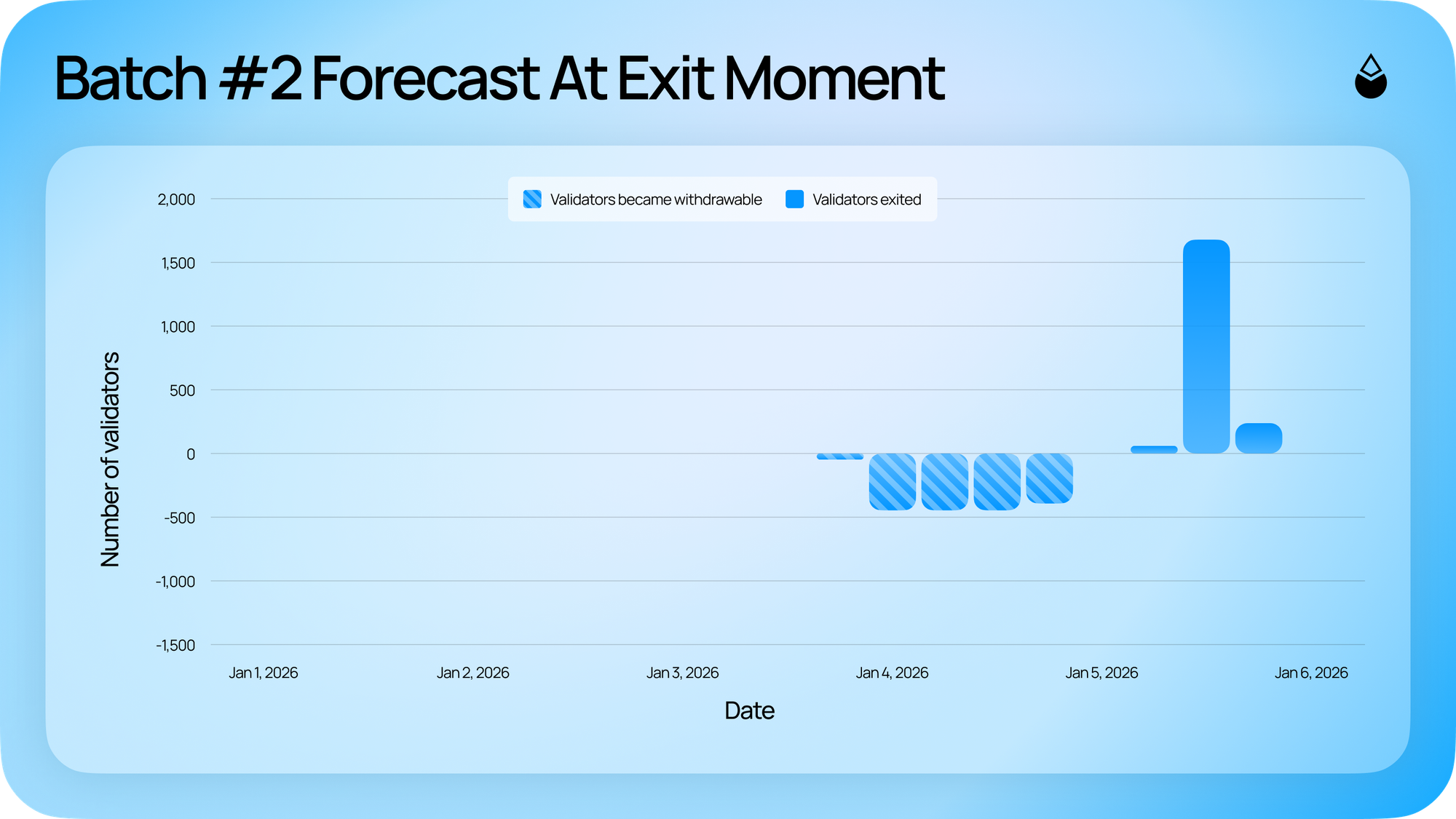
The second batch consisted of 1,792 validators and was executed one day after the test.
Analytics contributors forecasted that if exits were triggered within the predicted epoch window, the average skimming wait time should have been approximately 226.8 epochs. Following execution, the actual skimming time was 244 epochs, demonstrating strong alignment between the model and real network conditions.
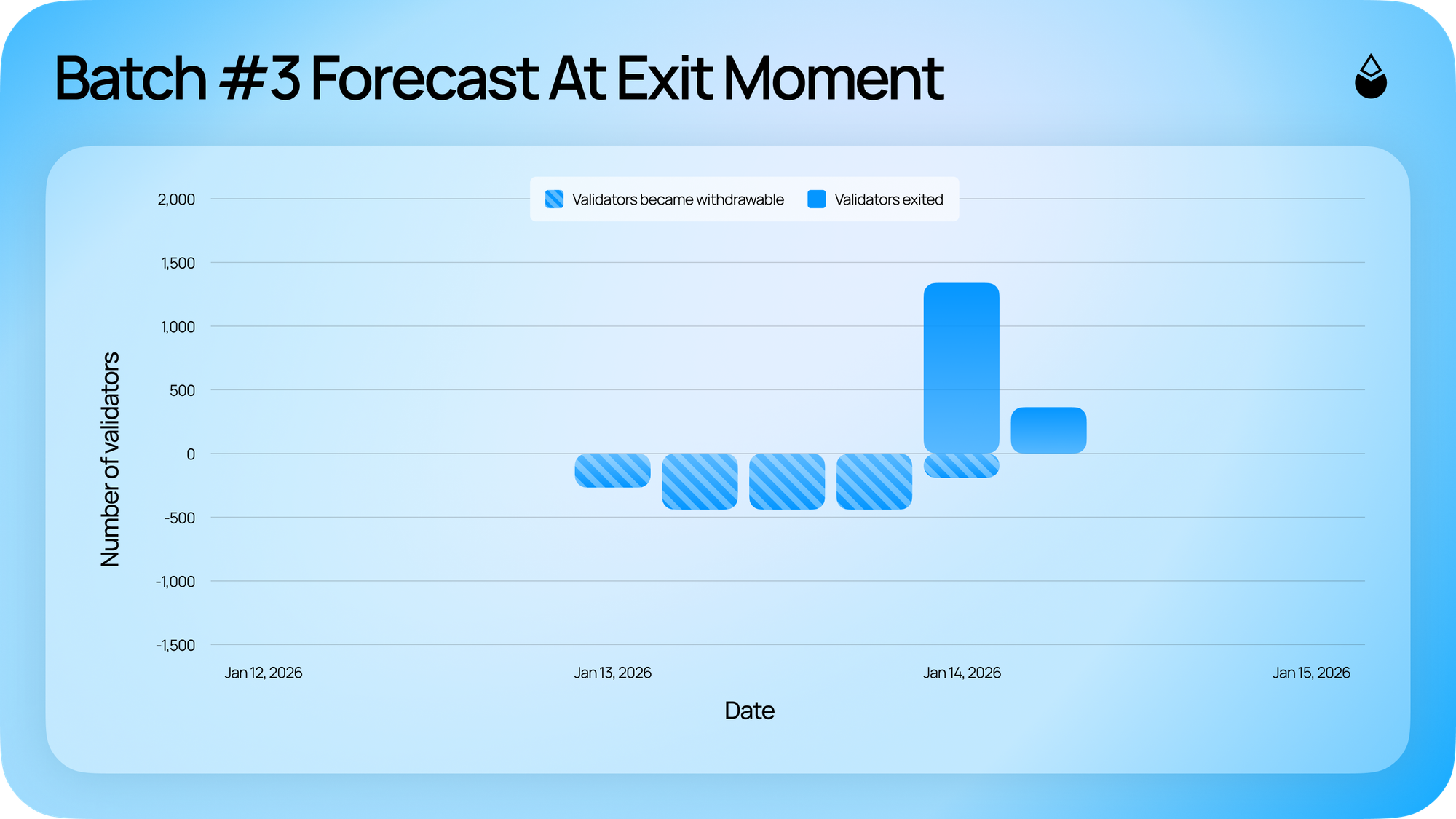
Batch #3
The third batch included 1,708 validators and was scheduled for mid-January. Modeling estimated 2.78 ETH of missed rewards.
Batch #4
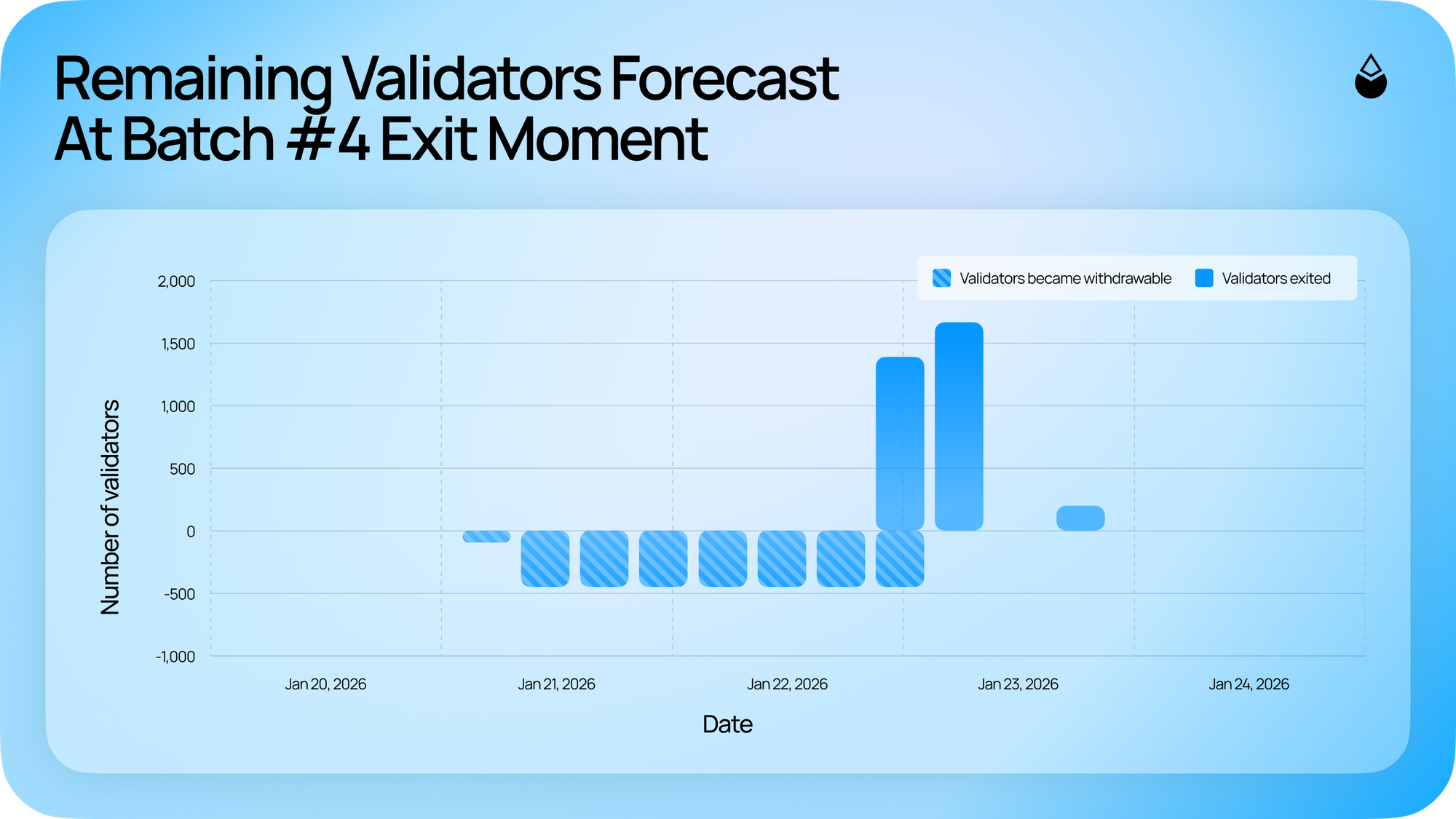
The fourth batch was the largest, consisting of 1,800 validators. Predicted skimming time was 215 epochs, actual 一 211 epochs, with the resulting missed rewards totaling 4.37 ETH.
One of the scenarios suggested exiting all remaining validators (3,237) within Batch #4. However, the simulation showed that doing so would have resulted in ~8.16 ETH missed rewards.
Batch #5
Instead, the remaining validators were divided into Batch #4 and #5, allowing exits to align more closely with the sweep cycle. This reduced the final batch's missed rewards to 3.15 ETH.
Batch Results Overview
The results across all batches are summarized in the table below.
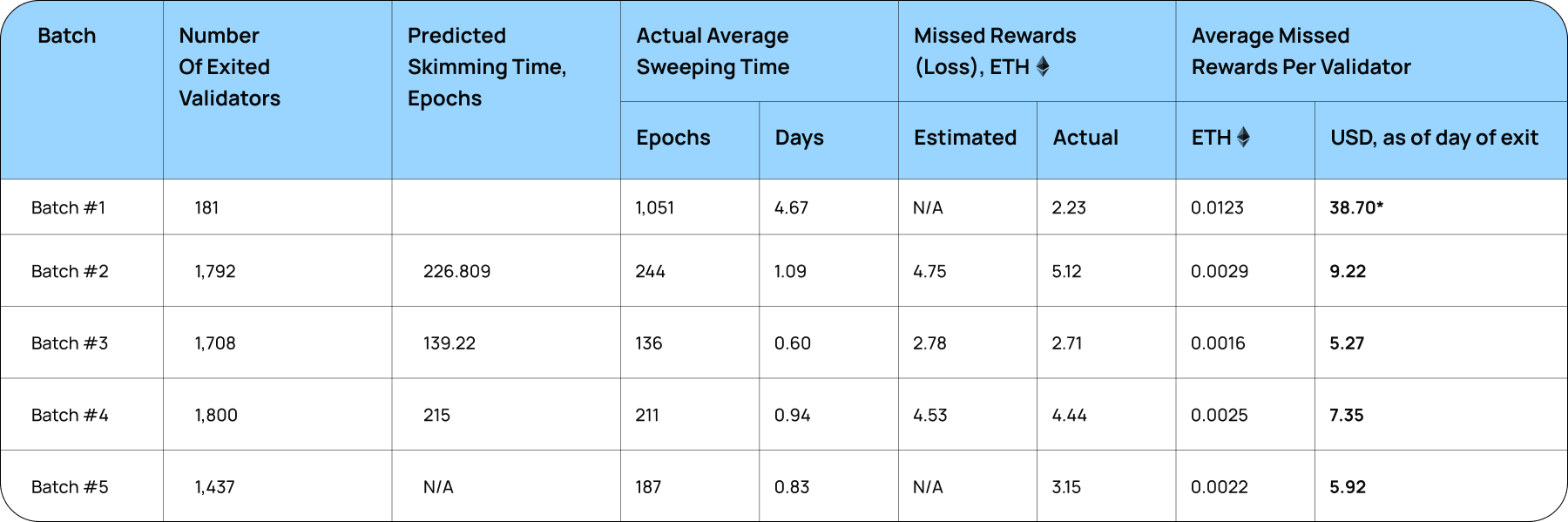
The coordinated process resulted in a predictable and well-distributed pattern of validator exits over the intended timeframe.
By aligning validator exits with the skimming pointer and exit queue conditions, Lido contributors together with the A41 team achieved a drastic reduction in rewards leakage. Key results:
- Cost reduction: Compared with the estimated organic exit baseline of 78 ETH, the scheduled exit strategy reduced reward loss by approximately 4.42x.
- Efficiency improvement: Total realized skimming losses were brought down to 17.64 ETH, substantially outperforming the initial modeled 35-45 ETH range for “precise” exits, enabled by a batched execution approach.
- Time optimization: Average skimming wait time was reduced from the historical 4.5 days to approximately 0.8 days.
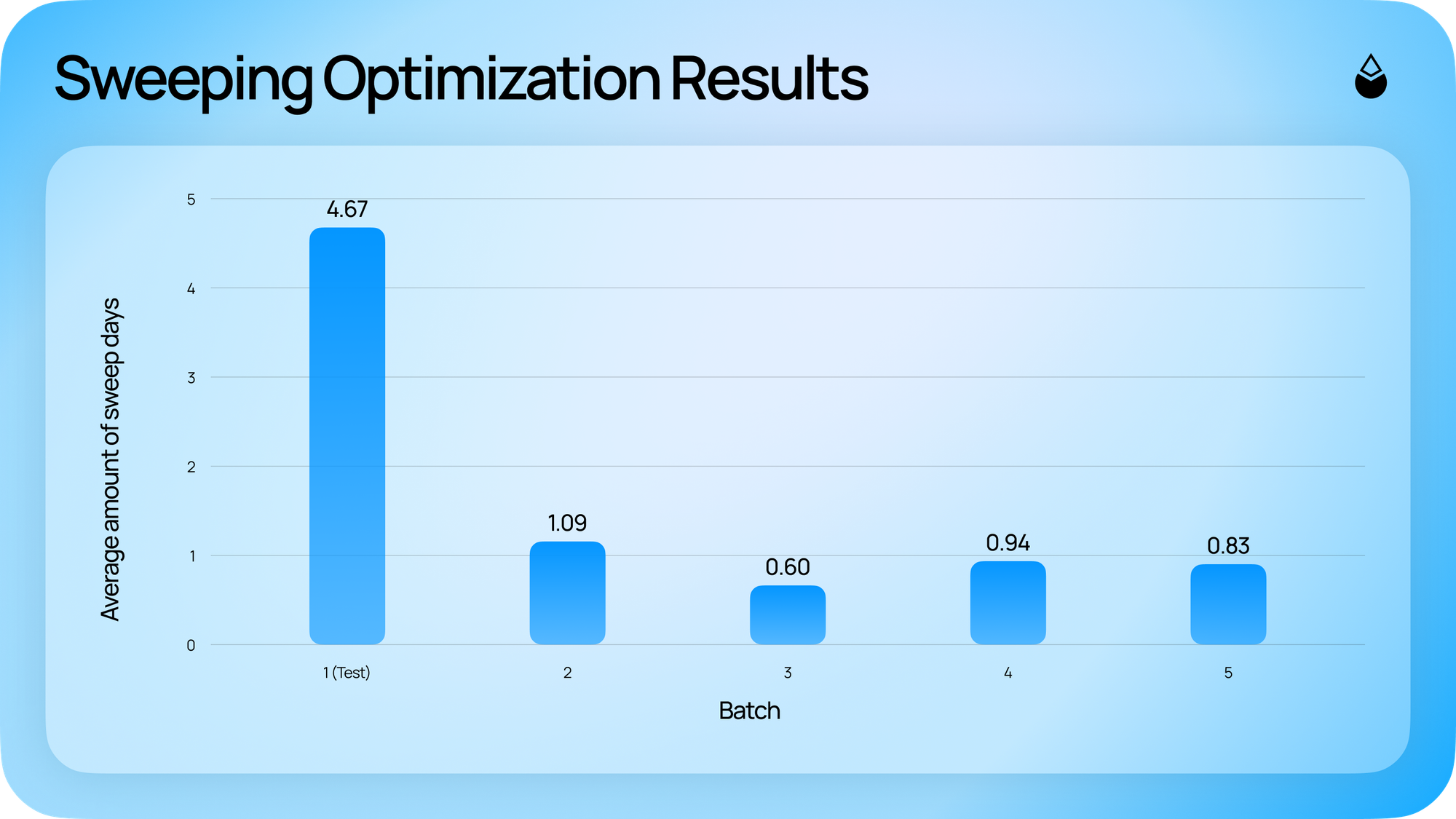
- Consistency across batches. The average loss per batch was approximately 3.53 ETH, demonstrating consistent efficiency regardless of the batch size.
Ethereum Queue Time Impact
One of the fundamental challenges when planning large-scale exits is the unpredictability of Ethereum’s validator queues. While historical data can provide useful patterns, queue conditions can shift rapidly, thus being a dynamic parameter that cannot be predicted with certainty.
Although Lido contributors performed extensive analysis using historical queue patterns, during the A41 exit process the Ethereum landscape evolved in ways that were difficult to anticipate.
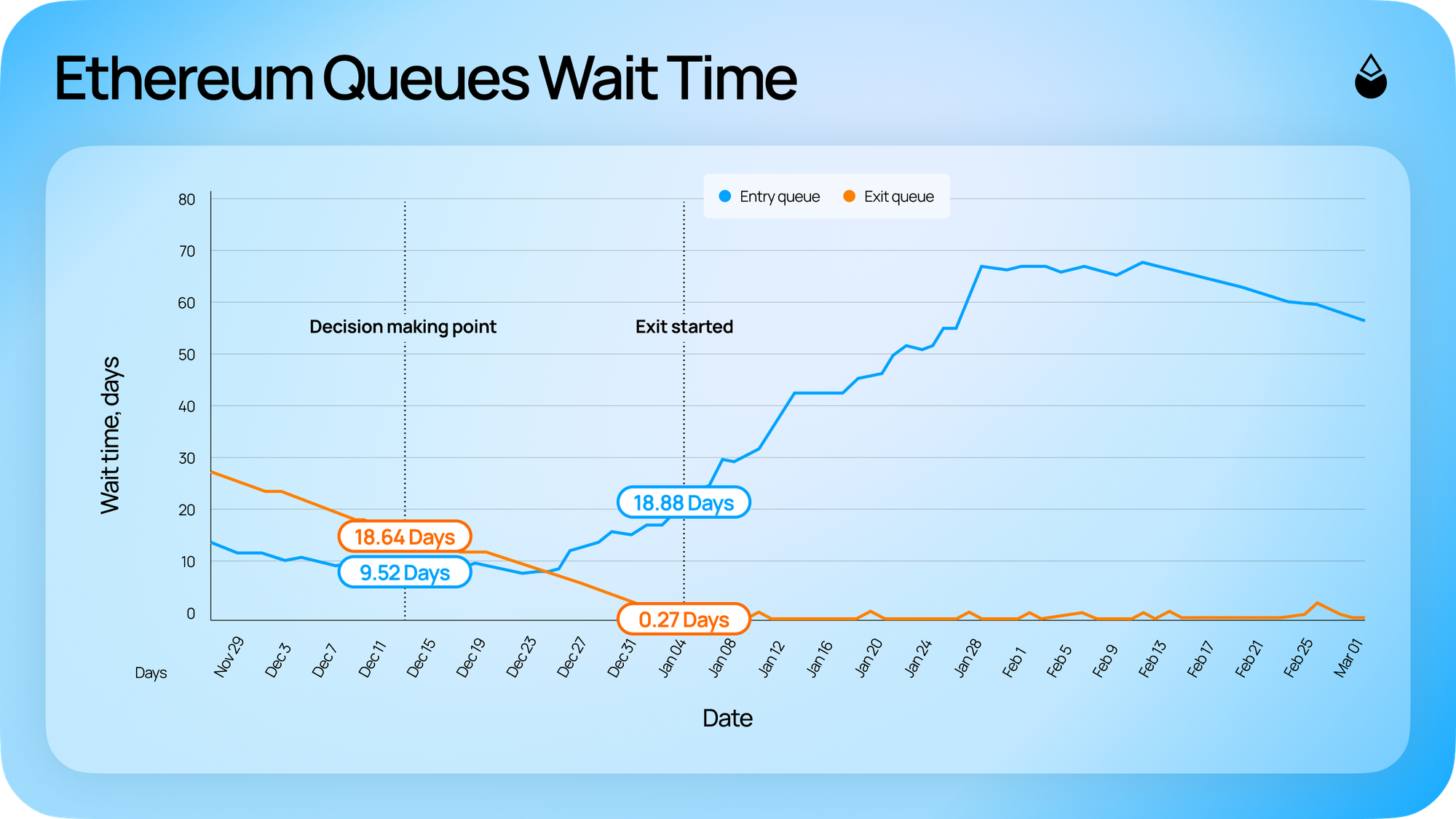
At the time the exit plan was designed, the exit queue was approximately 18.64 days. By the time it was actually executed, the queue had decreased to less than one day, allowing more accurate prediction of when voluntary exits should be initiated.
The activation queue, however, evolved in the opposite direction. By the time the first test batch was exited, the activation queue had already increased to 18.88 days. As the exit process unfolded, the activation queue continued to expand significantly, with the average activation queue time reaching ~42.8 days before validators could be re-activated.
Impact on Optimization Gains
The coordinated exit strategy reduced the average skimming wait time from ~4.5 days to 0.8 days, resulting a substantial improvement in withdrawal efficiency. However, it was ultimately offset by the unexpected growth of the activation queue.
This outcome highlights an important lesson:
Even highly optimized validator exit strategies remain subject to the broader dynamics of network-level parameters.
Despite these, the coordinated exit process still significantly reduced foregone rewards during withdrawal.
Further Implications
The actual exit results proved a substantial difference in foregone staking rewards between organic exits and a scheduled exit strategy. While the used approach was tailored to a specific Node Operator situation and network conditions, the underlying principles are broadly applicable and can be used by:
- Protocols managing large validator sets;
- Professional staking providers;
- Institutional or large-scale stakers;
- NOs coordinating validator rotations or consolidations.
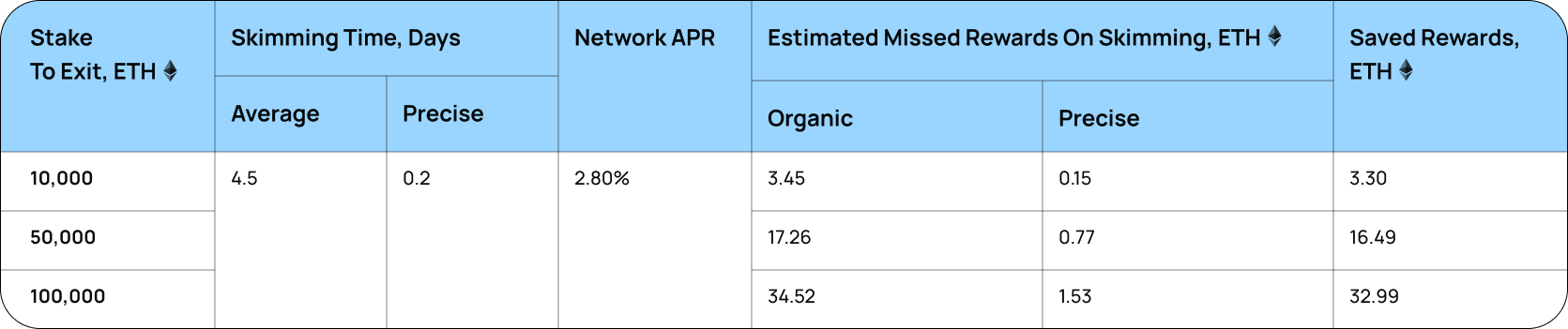
The table below illustrates the estimated difference between organic exit behavior and precisely timed exits in the predefined epochs.
For example:
- Exiting 10,000 ETH organically would result in ~3.45 ETH in missed rewards, while a precisely timed exit could reduce this by 23 times.
- At 50,000 ETH, the difference grows to ~16.5 ETH saved.
- At 100,000 ETH, ~95.56% of potentially lost rewards could be preserved through optimized exit timing.
As the number of validator scales into the hundreds of thousands of ETH—as seen in the A41 exit case—these efficiency gains become even more significant.
Lessons to Share
The A41 exit case provides several operational insights:
1. Exit timing matters
Validator exits are not instantaneous events. The timing between exit request, skimming, and withdrawal processing can materially affect the amount of rewards forfeited during the process.
2. Validator index distribution impacts exits
Understanding index distribution can help to plan batch scheduling and exit sequencing to better align validator exits with the skimming and withdrawal cycles.
3. Batching improves operational efficiency
For a large number of validators, attempting to trigger exits individually may not be cost-efficient. Batch-based exit strategies allow balancing sweep cycle alignment with operational simplicity.
4. Data-driven coordination improves outcomes
This exit case illustrates the value of combining historical Ethereum data analysis and continuous monitoring to remain closely aligned with network dynamics while minimizing lost rewards.
5. Network queues remain unpredictable
Validator queues are a dynamic network variable. Planning should always incorporate monitoring and flexibility, including buffers for unexpected delays, rather than relying solely on static projections.
Closing Thoughts
The coordinated exit of ~7,000 validators demonstrates that careful modeling, batch scheduling, and real-time coordination significantly reduced reward loss compared with an organic flow, while maintaining predictable validator operations.
As Ethereum staking continues to scale, similar approaches may become increasingly relevant for validator lifecycle management, including validator rotations, infrastructure migrations, organic withdrawals, and large-scale exits.